Good News Story From: Syria – A Journey for Bread That Changed a Family
A war can end on paper. A landmine does not know that.
It does not understand ceasefires, peace agreements or the passage of time. It simply waits - beneath a road, beside a field or close to the paths that ordinary people use every day.
On the morning of 29 October 2019, 40-year-old Hassan left his home in a village in the Al-Hasakah governorate on his motorcycle. He was travelling to the nearby village to buy bread for his children. It was the most ordinary of journeys. One made by fathers across the world every morning.
Hassan never completed it.
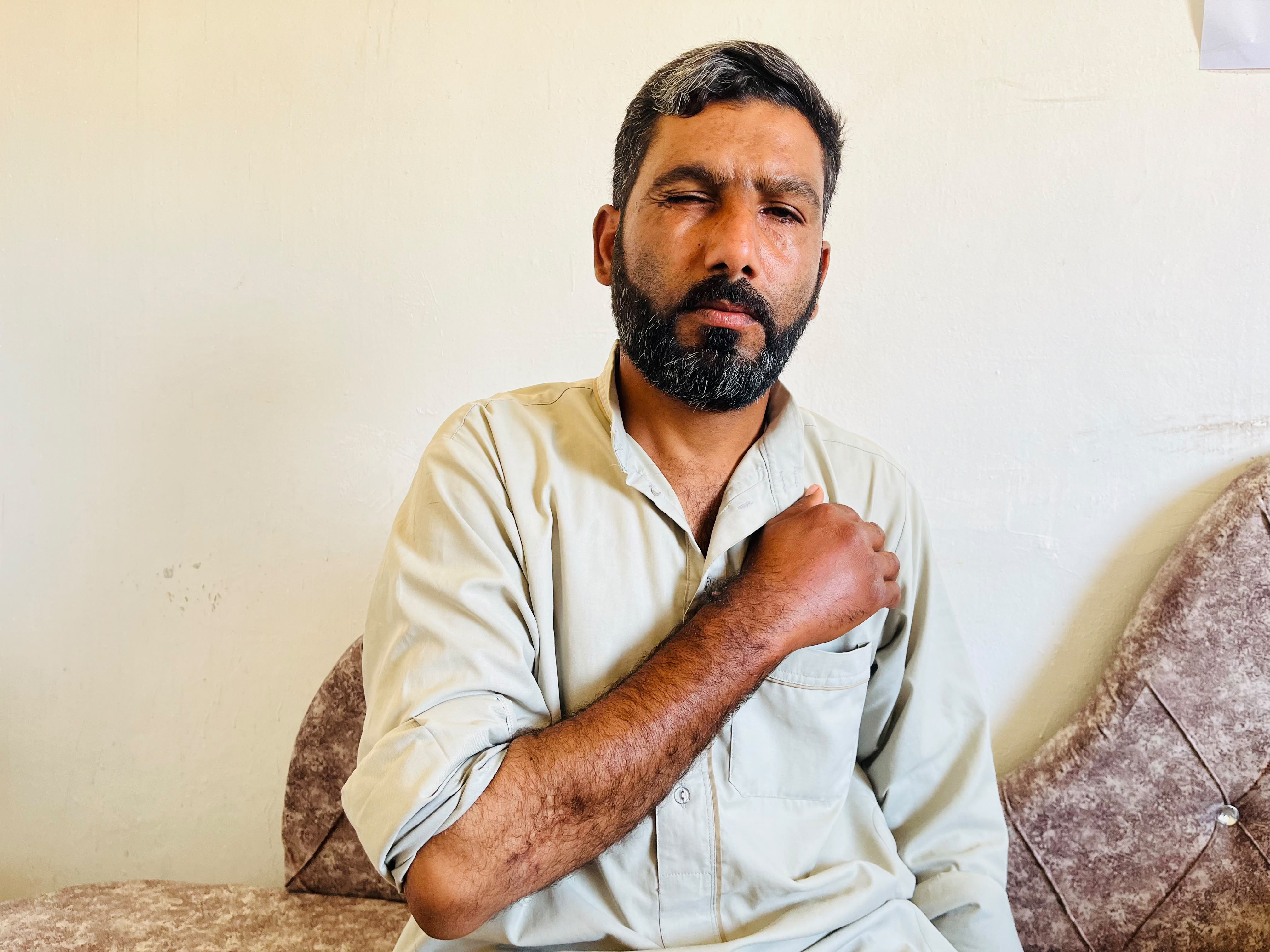
An anti-personnel landmine, believed to have been left behind by an earlier conflict, detonated beside the road. In a fraction of a second, Hassan’s life - and the lives of everyone who depended upon him - changed completely.
The explosion destroyed the sight in his right eye. It damaged the hearing in his right ear and drove fragments into his right hand, causing severe injuries that required several operations and the insertion of metal rods into his joints.
He survived. But survival was only the beginning.
Before the explosion, Hassan supported his family through daily labour. He was their principal breadwinner: a man able to work, provide and carry the responsibilities expected of him.
Afterwards, chronic pain and restricted movement made that work impossible. The family lost its only dependable source of income and became increasingly reliant upon relatives and humanitarian assistance to meet the cost of food, healthcare, education and the most basic necessities of daily life.
The physical injuries are visible in these photographs taken during ITF-Reachout’s interview with him. The deeper wounds are less obvious. Hassan still experiences anxiety when travelling through rural areas or along unpaved roads. Places that once represented work, movement and normal life now carry the terrifying possibility of hidden danger.
The explosion affected not only his body, but his confidence, independence and sense of responsibility as a husband and father.
His family also faces another profound challenge. One of Hassan’s children lives with brain atrophy and Tetralogy of Fallot, a serious congenital heart condition requiring continuing medical care and specialist treatment.
In the photograph, Hassan is shown feeding and caring for his son. They are familiar images, but extraordinarily powerful ones. They show that, despite his own injuries and pain, he continues to shoulder the daily responsibilities of fatherhood.
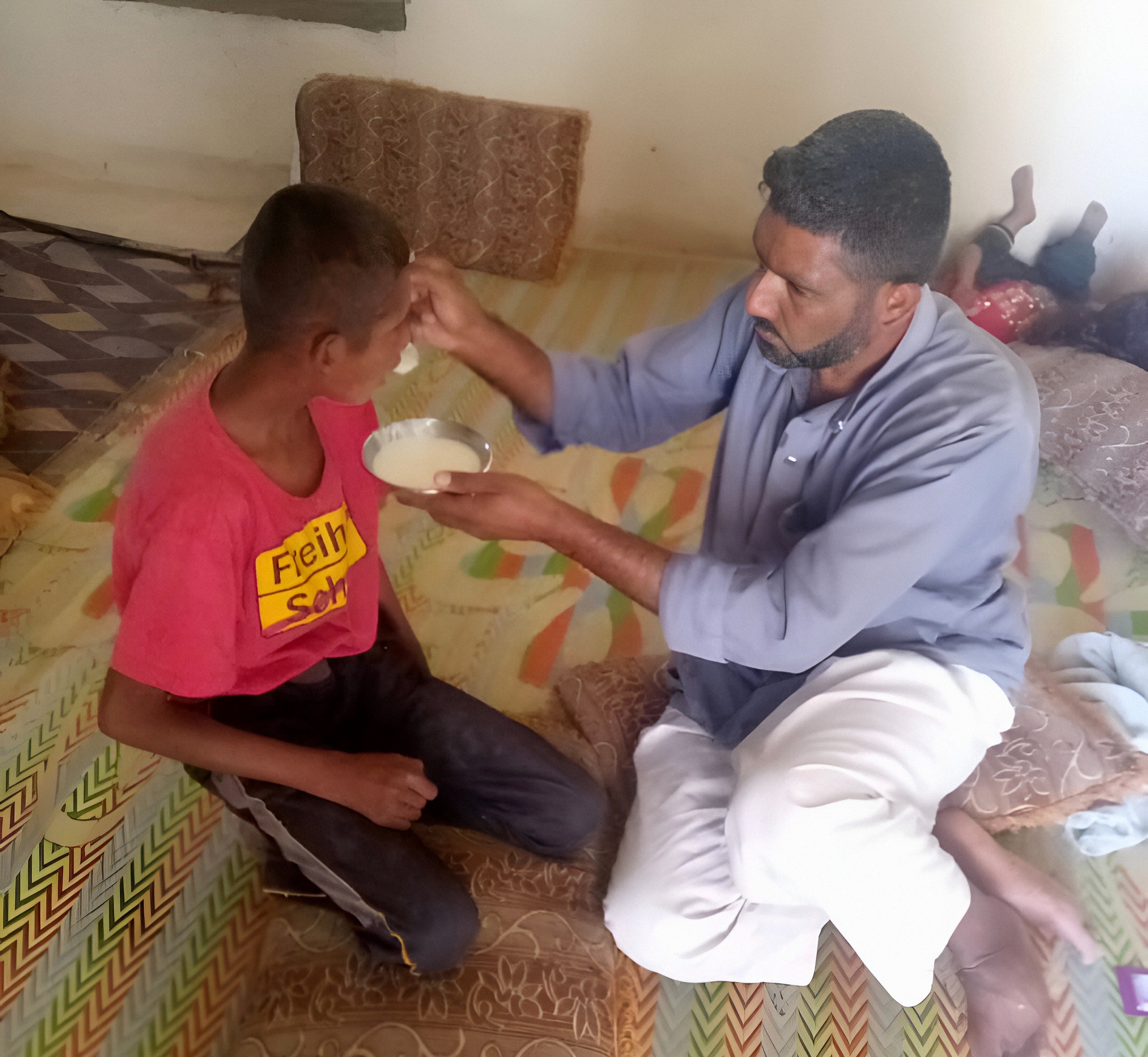
This is the reality of landmine contamination. It is never limited to one explosion or one casualty. The effects spread outwards, touching children, spouses, relatives, and entire communities. The blast lasts for a second. Its consequences can last for generations.
But Hassan’s story is not only a story of loss. It is also a story of strength, responsibility, and action. With Hassan’s full consent, ITF’s local partner organization, Reachout Mine Action Organization, has documented his experience so that others might learn from it. He wants his story shared because he understands that awareness can save lives.
As he explained during the interview,
“A single moment can change the life of a person and an entire family.”
That message now forms part of something much larger.
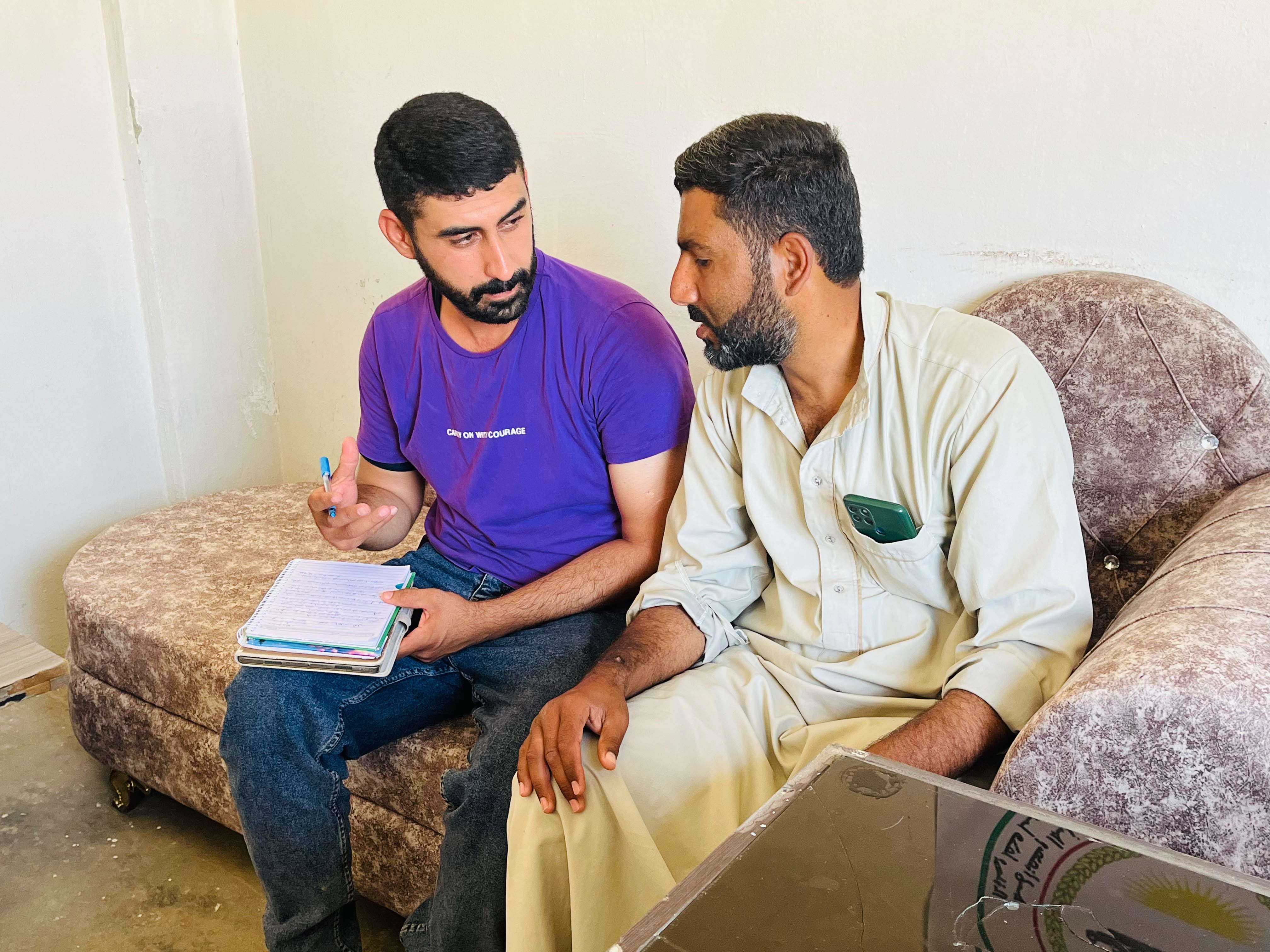
ITF, together with Reachout has conducted an integrated programme of mine action in this part of Al-Hasakah governorate and the surrounding communities, including the area in which Hassan’s accident occurred. Our national teams have carried out Non-Technical Survey, Technical Survey and the Clearance of mines and other explosive remnants of war from agricultural land, roads and locations regularly used by civilians.
Hazardous areas have been identified and marked. Threats have been reported and addressed in coordination with the relevant authorities, with activities undertaken in accordance with International Mine Action Standards.
For the people who live there, this work is not an abstract technical exercise. It means that a farmer may once again reach his field. A shepherd may move livestock without unknowingly entering contaminated ground. A child may walk between villages with less risk of encountering something designed to kill or maim. A father may travel to buy bread and return home safely.
Clearance removes the threat from the ground. Explosive Ordnance Risk Education helps protect people until that threat can be removed. ITF-Reachout EORE teams have therefore worked with men, women, children, farmers, shepherds and other vulnerable groups throughout this village and neighbouring communities. Their sessions teach people how to recognise potential hazards, avoid suspicious objects, adopt safer behaviour and report explosive items through the correct channels. This is often the first and most immediate line of protection available to a community living among the remnants of war.
Behind these visible activities lies an equally important investment in people.
The ITF Humanitarian Mine Action Technical Advisers are working alongside Reachout to strengthen the organisation’s operational capacity and support the continuing development of its national staff.
Through training, mentoring, quality assurance, technical advice and leadership development, we are helping Reachout to build the systems, confidence and professional capability required to deliver mine action safely, effectively, sustainably – and independently. The purpose is not to replace national expertise. It is to strengthen it.
Every improved procedure, every successful assessment, every quality-assurance visit and every national staff member developed represents a lasting increase in Reachout’s ability to protect its own communities.
That is how sustainable humanitarian capacity is built: not through a single course or intervention, but through patient, consistent work carried out alongside the people who will remain long after international advisers have gone.
None of this would be possible without the support of the French Ministry for Europe and Foreign Affairs and the Ministry of Foreign and European Affairs of Slovenia. Their support is enabling Reachout to survey hazardous areas, clear contaminated roads and land, deliver life-saving risk education and develop the national capability needed to continue that work into the future.
The value of that investment can be measured in square metres cleared and awareness sessions delivered. But its real impact is measured in human terms: journeys completed, fields reopened, livelihoods restored, and families spared the experience that Hassan and his children continue to endure.
The good news is not that Hassan survived a landmine explosion. No civilian should ever have been placed in that position.
The good news is that he has chosen to turn his experience into a warning that may protect others. It is that the ITF-Reachout teams are removing the threats that remain beneath the ground. It is that communities are learning how to recognise danger before another life is changed. And it is that, through sustained donor support and long-term capacity development, Syria is building its own ability to confront this deadly legacy.
A landmine may remain active long after a war has ended. But so too can courage, compassion and determined humanitarian action.
And with every hazardous area cleared, every national operator developed and every child taught how to stay safe, the balance moves a little further away from fear - and towards recovery, dignity and hope.
*Names changed for security reasons.
ITF expresses its appreciation to the French Ministry for Europe and Foreign Affairs and Slovenian Ministry for Foreign and European Affairs for their support and to all partners and donors whose cooperation enables this work.