First Monitoring Visit under the New Mine Action Project in Tajikistan
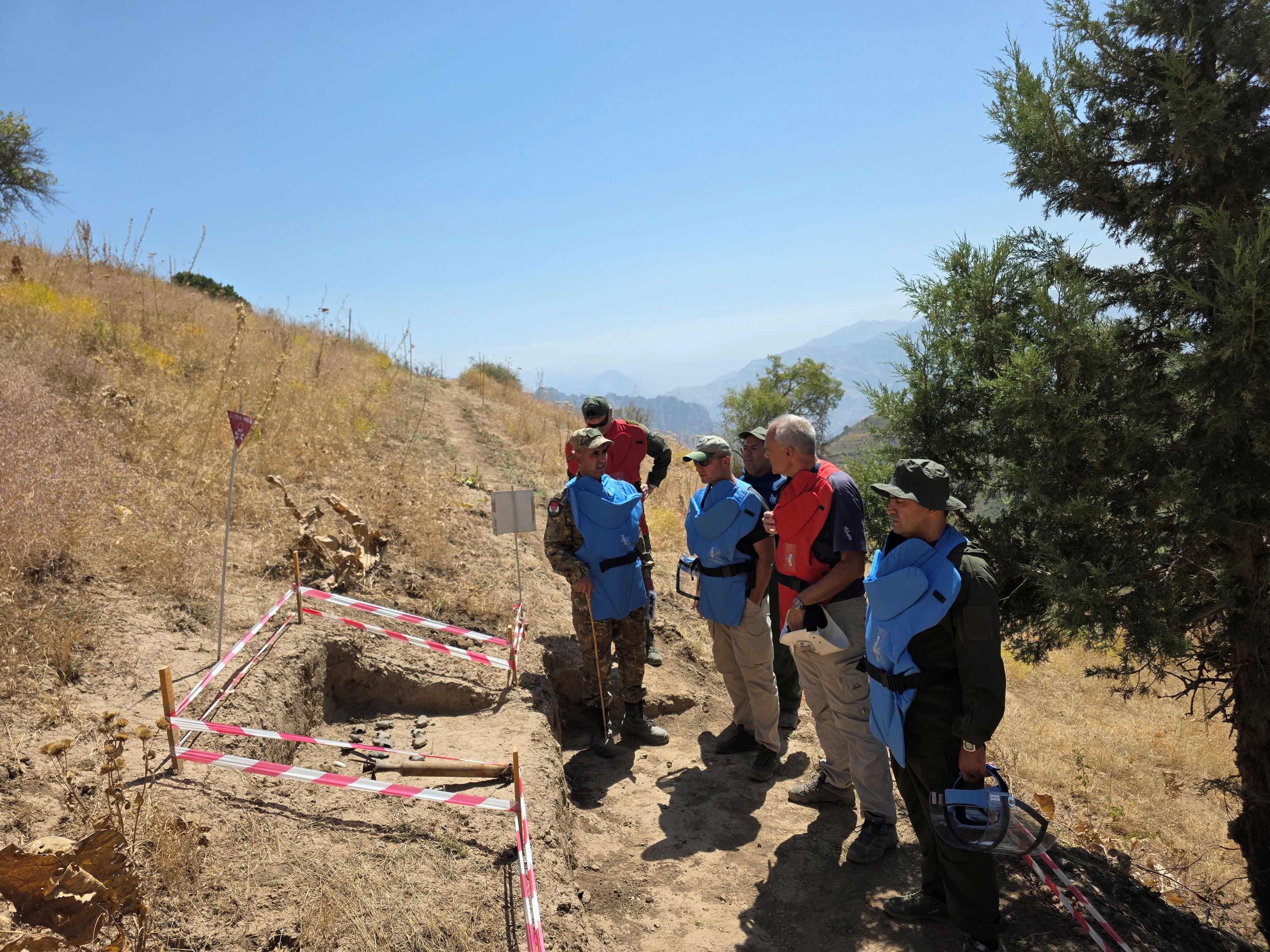
Tajikistan continues to address contamination from landmines and other explosive remnants of war, largely linked to the country’s civil war and mine laying along the Tajik-Afghan border. While considerable progress has been made over the years, explosive hazards remain in parts of the country and continue to affect communities and the use of land.
The new project, running from July 2026 to June 2028, supports Tajikistan National Mine Action Center (TNMAC) in coordinating and carrying out mine action activities across Tajikistan. Supported by the United States, it brings together land release, explosive ordnance risk education, victim assistance, information management and national capacity development.
From the National Mine Action Centre to the Field
The monitoring visit, conducted from 8 to 15 August 2026, began with meetings at TNMAC, where ITF’s Project Manager discussed the implementation of the new project, operational priorities and the practical support required for its activities. The visit also included the review of facilities used by TNMAC, including its archive and workshop and storage areas, as well as its humanitarian demining training centre.
From there, the visit moved into the field. In Khatlon Province, the team visited mine action sites in the Jayhun and Panj districts, followed by visits to sites in Shohin district, including the villages of Sarinamac and Sarigor. In Shamsiddin village, the team also attended an Explosive Ordnance Risk Education (EORE) activity, seeing how safety messages are delivered directly to communities living close to contaminated areas.
At the Romit mine action site and the OSCE Regional Explosive Hazard Training Center (REHTC), the team was provided further with insight into the operational and training environment in which Tajikistan’s mine action personnel work.
A Comprehensive Mine Action Project
The activities observed during the visit form part of a broader project designed to address explosive hazards in several complementary ways.
Land release is one of its central components. Three Survey and Demining Teams will be supported to survey and release 383,000 sqm of land and manually clear a further 225,000 sqm of confirmed hazardous areas. Field operations will be coordinated and overseen by TNMAC, with information on identified hazardous areas recorded and maintained in the national mine action database.
The project also recognises that reducing the impact of explosive hazards involves more than clearance. EORE activities will reach schools in Gorno-Badakhshan, Khatlon, Sughd and the Districts of Republican Subordination, providing children and teachers with information to help them recognise and avoid explosive hazards.
For people already affected by explosive ordnance, this project includes victim assistance activities. Technical working groups will be held in Khorog, Bokhtar, Khujand and Rasht, creating space for relevant actors to exchange information and strengthen coordination around available support.
Supporting all of this is continued investment in TNMAC’s national capacity, including personnel, field monitoring, vehicles, logistics, information management and opportunities for staff to participate in regional and international mine action events. Maintaining TNMAC’s information management system will help keep data on contamination and operations accurate and accessible for planning and coordination.
In this way, the project brings together the different parts of mine action – national coordination and capacity, land release, risk education, victim assistance and information management – within one programme.
The first monitoring visit provided an opportunity for ITF and TNMAC to review these activities from both the national and field perspectives, discuss operational needs and establish priorities for the next stages of implementation.
Supported by the United States, the project is planned to continue through June 2028, providing sustained support to Tajikistan’s nationally led efforts to address explosive hazards and reduce the risks they pose to people and communities.