Kazakhstan Strengthens National Ammunition Disposal Capacity with U.S. Support
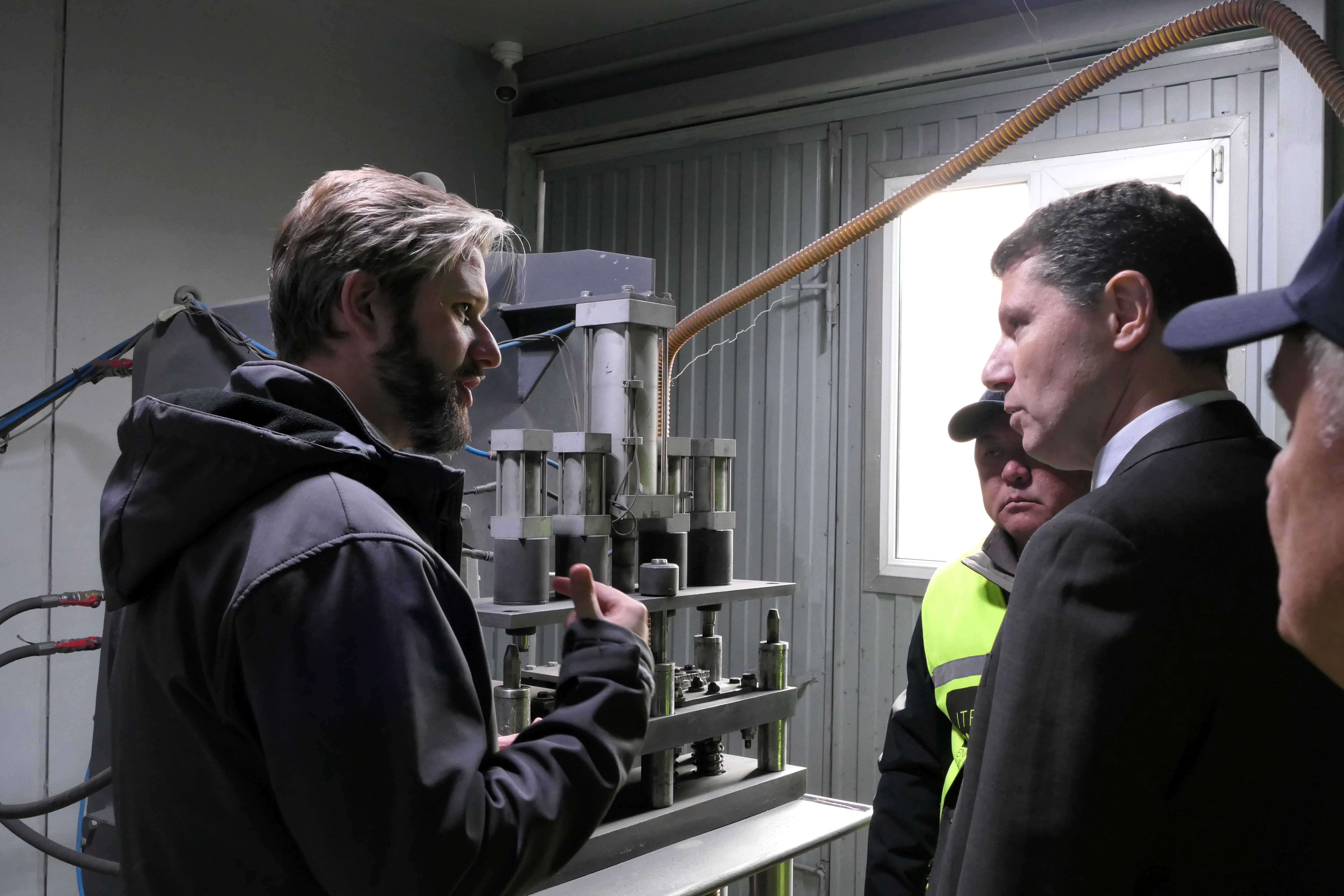
Kazakhstan is strengthening its capacity to safely dispose of surplus, obsolete and unserviceable ammunition through a U.S.-funded project implemented by ITF Enhancing Human Security in cooperation with its partners. A handover ceremony in Arys marks further progress in establishing national industrial disposal capabilities and supporting the safe management of ammunition stockpiles.
The project combines specialized equipment, technical assistance and personnel training to help Kazakhstan reduce the risk of unplanned explosions, strengthen stockpile management and limit the potential for surplus weapons and ammunition to enter illicit circulation.
The handover ceremony in Arys on 4 November 2026 brought together representatives of Kazakhstan’s Ministry of Industry and Construction, Kazakhstan Technologies (KazTech), the United States and ITF Enhancing Human Security. Remarks were delivered by Ruslan Akhtanov, Head of KazTech; U.S. Consul General Peter Kaufman; Pavel Filipov, Head of Department of Military Defence production from the Ministry of Industry and Construction of Kazakhstan; and Urban Špital, ITF Regional Program Director for Central Asia.
“Kazakhstan asked for a partner, and the United States answered,” Consular General Kaufman said of the project. “Today marks a milestone for Kazakhstan’s security and an accomplishment to take pride in.”
“Kazakhstan’s continued commitment to operating and maintaining these systems will turn today’s investment into lasting national capacity. ITF remains committed to supporting that effort,” said Urban Špital, ITF Regional Program Director for Central Asia.
Building National Capacity through Measurable Results
The project has already delivered measurable operational results. Between July 2025 and September 2026, the 23 mm and 30 mm ammunition processing line, established by ITF and operated by KazTech since becoming operational in summer 2025, processed 368,730 rounds of 30 mm ammunition, weighing more than 308 tonnes. The line operates in regular shifts, supported by standard operating procedures, maintenance arrangements and technical monitoring. Its formal handover, together with the newly delivered systems for disposing of anti-tank mines and large-calibre artillery ammunition, further strengthens Kazakhstan’s national capacity for safe ammunition disposal.
The 4 November ceremony marks a further milestone in the development of Kazakhstan’s disposal capabilities, including the handover of specialized systems for RDX-containing anti-tank mines and artillery ammunition. The mine-disposal system, supplied by DemilTech, has been installed and demonstrated with live mines. The artillery ammunition system, designed to process 122 mm and 152 mm rounds, has undergone technical development and factory trials, followed by installation and adaptation at the Arys facility.
The project’s wider activities contributed to the destruction of 354 anti-aircraft missiles between 2023 and 2026. Separately, in 2025, 334 R-60 and R-73 missile warheads containing depleted uranium were disassembled, and their extracted energetic materials were disposed of. These warheads are additional to, and are not included in, the total of 354 anti-aircraft missiles. The removed radioactive components remained under controlled national custody.
Reducing Explosive Hazards and Proliferation Risks
Kazakhstan inherited substantial ammunition stockpiles from the Soviet era, including ageing items that existing facilities could not safely process.
Through specialized equipment, training and technical assistance, the project is helping Kazakhstan develop the expertise and procedures needed to assess ammunition, conduct controlled disposal operations and manage stockpiles more safely. These capabilities help reduce explosive hazards while strengthening national oversight and limiting the risks associated with surplus weapons and ammunition.
The assistance extends beyond disposal operations to strengthening laboratory capacity for ammunition and missile testing. ITF delivered theoretical and practical training for personnel in Ayagoz, supporting national capabilities to assess ammunition condition and serviceability.
ITF also supports the review of standard operating procedures, technical documentation, safety oversight and traceable disposal records. Together, these activities strengthen technical expertise and help national institutions make informed decisions about ammunition condition, serviceability and disposal.
Preserving the Results through Continued Cooperation
The progress achieved in Arys demonstrates how international cooperation can translate investment into practical national capabilities. Specialized equipment and training establish an important foundation, while effective operation, maintenance, technical oversight and sustainable financing are essential to preserving these results over time.
For Kazakhstan and its international partners, sustaining the capabilities developed through the project is a shared interest. Continued cooperation and long-term planning can help maintain operational standards, protect the value of the investment and ensure that the systems continue to contribute to safer ammunition management and reduced explosive hazards.
As the implementing organization, ITF Enhancing Human Security supports coordination among the institutions involved, technical assistance and the development of national operational capacity. The experience gained in Arys provides a foundation for further progress in Kazakhstan and demonstrates the importance of sustained international engagement in conventional ammunition management.
The U.S. award implemented by ITF totals USD 9,517,500 through 31 December 2028 and covers a broader programme of activities in Kazakhstan beyond the Arys disposal base. The project reflects the practical value of U.S.–Kazakhstan cooperation in strengthening national capabilities, reducing security risks and supporting long-term stability in Central Asia.