The Third Review Conference of the Convention on Cluster Munitions
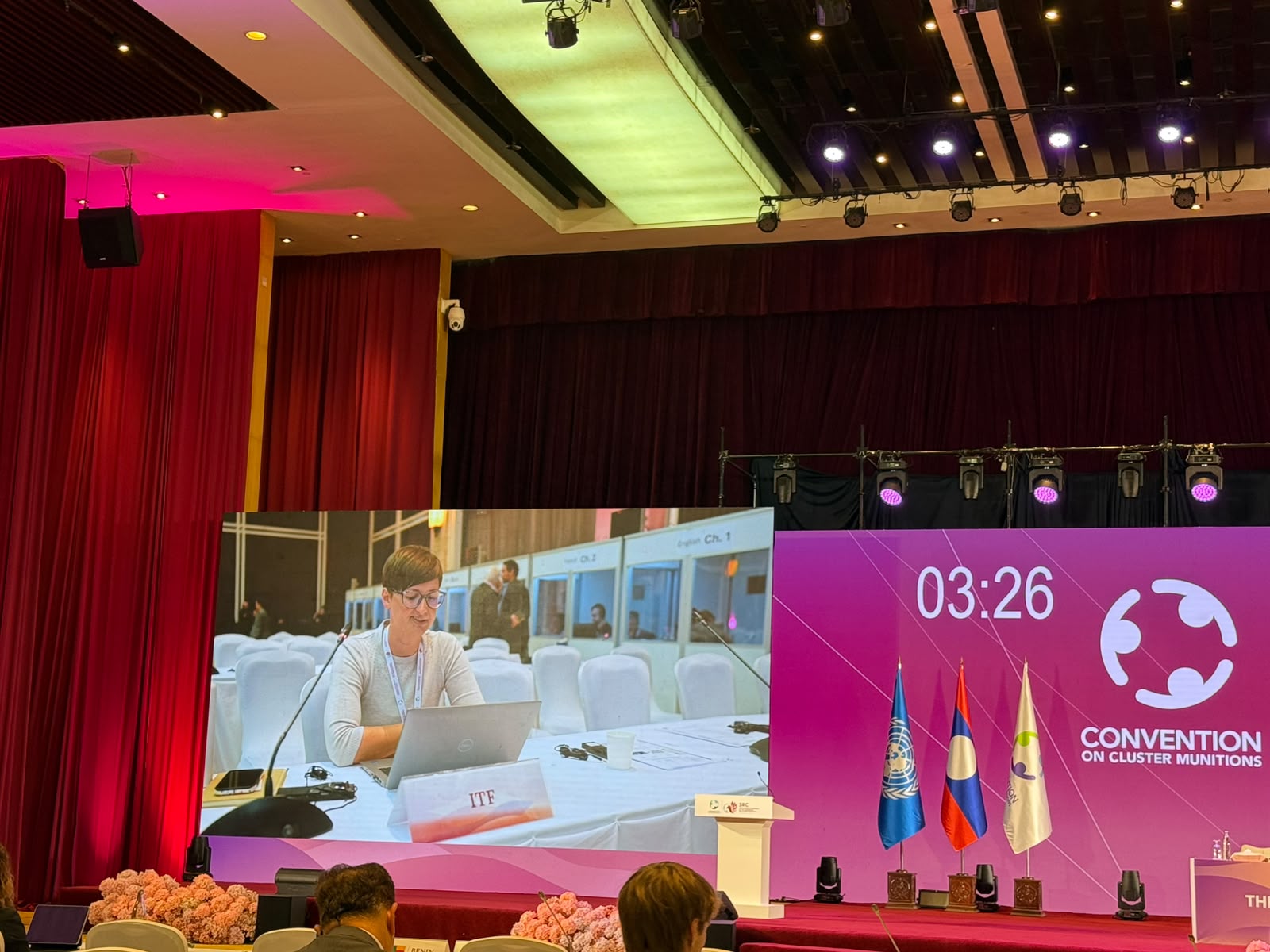
From 14 to 18 September 2026, representatives of States Parties, observer states, organisations, civil society and other partners gathered in Vientiane, Lao PDR, for the Third Review Conference of the Convention on Cluster Munitions (CCM). Held under the theme “Accelerating Progress Towards a World Free from the Threat of Cluster Munitions,” the conference brought together more than 500 delegates from 91 countries and 27 organisations.
The five-day conference provided an opportunity to review progress since the previous review cycle, discuss remaining challenges and set priorities for the years ahead. Discussions covered the implementation of the Convention, including the clearance of contaminated land, risk education, victim assistance, stockpile destruction and universalisation.
The conference concluded with the adoption of three key documents: the Review Document, a Political Declaration and the Vientiane Action Plan 2027–2031, setting out priorities and actions for the next five years.
For ITF, the conference was also an opportunity to meet with national authorities, partners and organisations working directly on cluster munition contamination. These meetings provided space to exchange experiences, discuss ongoing challenges and strengthen connections between those working towards the same objective in different parts of the world.
Why This Matters
Lao PDR provided a particularly relevant setting for the Review Conference. It remains one of the countries most heavily contaminated by cluster munition remnants in the world. The Cluster Munition Monitor 2026 classifies the contamination as “massive” – more than 1,000 square kilometres. To put this into perspective, that is an area roughly the size of the entire Hong Kong Special Administrative Region – a densely populated international metropolis of more than seven million people. And even this is only a minimum estimate: there is still no reliable figure for the total area contaminated by cluster munition remnants.
But the issue discussed in Vientiane extends far beyond Lao PDR.
Cluster munitions can continue to pose a threat long after a conflict has ended. When unexploded submunitions remain in agricultural fields, around homes or along routes used by communities, they can restrict access to land, affect livelihoods and put people at risk for years or even decades.
The scale of the challenge also makes clear why national authorities cannot address it alone. Continued progress depends on sustained international cooperation, technical expertise and funding, particularly in countries where contamination remains extensive and difficult to address.
The Cluster Munition Monitor 2026 recorded 1,063 people killed or injured by cluster munitions in 2025, with civilians accounting for 87% of reported casualties. New casualties were recorded in nine countries, including Lao PDR, Lebanon, Syria and Ukraine. At the end of 2025, 29 countries and other areas were known to remain contaminated by cluster munition remnants.
These figures show that cluster munitions remain both a legacy of past conflicts and a current humanitarian concern. Clearance is not only about removing explosive items. It means making land safe to use, allowing people to move freely, supporting livelihoods, and helping communities recover.
It also means ensuring that people who have survived these weapons are able to access the support they need. The Convention therefore connects several aspects of humanitarian action: preventing new harm, clearing contaminated land and supporting survivors in rebuilding their lives.
From International Commitments to Practical Action
ITF’s work on cluster munitions is one practical example of how international commitments are translated into action on the ground.
In Lebanon, ITF has been supporting cluster munition clearance and mine action for more than 15 years as it remains heavily affected by cluster munition contamination. The work currently continues in Mount Lebanon in close cooperation with LMAC, and thanks to funding provided by the Republic of Korea and the Republic of Slovenia.
At the same time, ITF's work with Lebanon's national mine action structures goes beyond clearance. With support from the United States of America, ITF has been strengthening LMAC's operational capacity through equipment, supplies and training, helping sustain the national mine action programme. US support through ITF also contributes to the capacity of the Lebanese Armed Forces Engineering Regiment to address explosive ordnance disposal (EOD) needs across the country.
ITF also supports cluster munition clearance in Serbia, working closely with the Mine Action Centre of the Republic of Serbia and with significant support from the United States of America, as well as the Republic of Korea and the Republic of Serbia.
For ITF, this work is part of a broader commitment to reducing the risks posed by explosive remnants of war while supporting national authorities and strengthening the partnerships needed to address them. In the case of cluster munitions, that means contributing to the clearance of contaminated land, supporting national mine action structures, and existing local capacities and helping connect international resources with practical work in affected communities.
The conference in Vientiane therefore offered more than an opportunity to discuss global progress. It brought together people working on the same problem from very different contexts – creating space to share experience, understanding where challenges remain and strengthening the partnerships needed to continue the work.
ITF statement at the conference:
“The objective is clear. Fewer lives disrupted by cluster munition remnants, more land safely returned to communities, survivors better supported in rebuilding their lives, and a future in which the humanitarian consequences of these weapons are no longer passed on to another generation. ITF remains committed to working with states, national authorities and international partners towards that objective.”
The Third Review Conference closed with a new five-year action plan. Its implementation will ultimately be measured not only by the commitments made in Vientiane, but by what happens afterwards: contaminated land cleared, survivors supported, communities made safer and national capacities strengthened.
For ITF, that means continuing to work with affected communities, national authorities, partners and donors to turn these commitments into practical action on the ground.