ITF Holds Victim Assistance Side Event at UMAC26
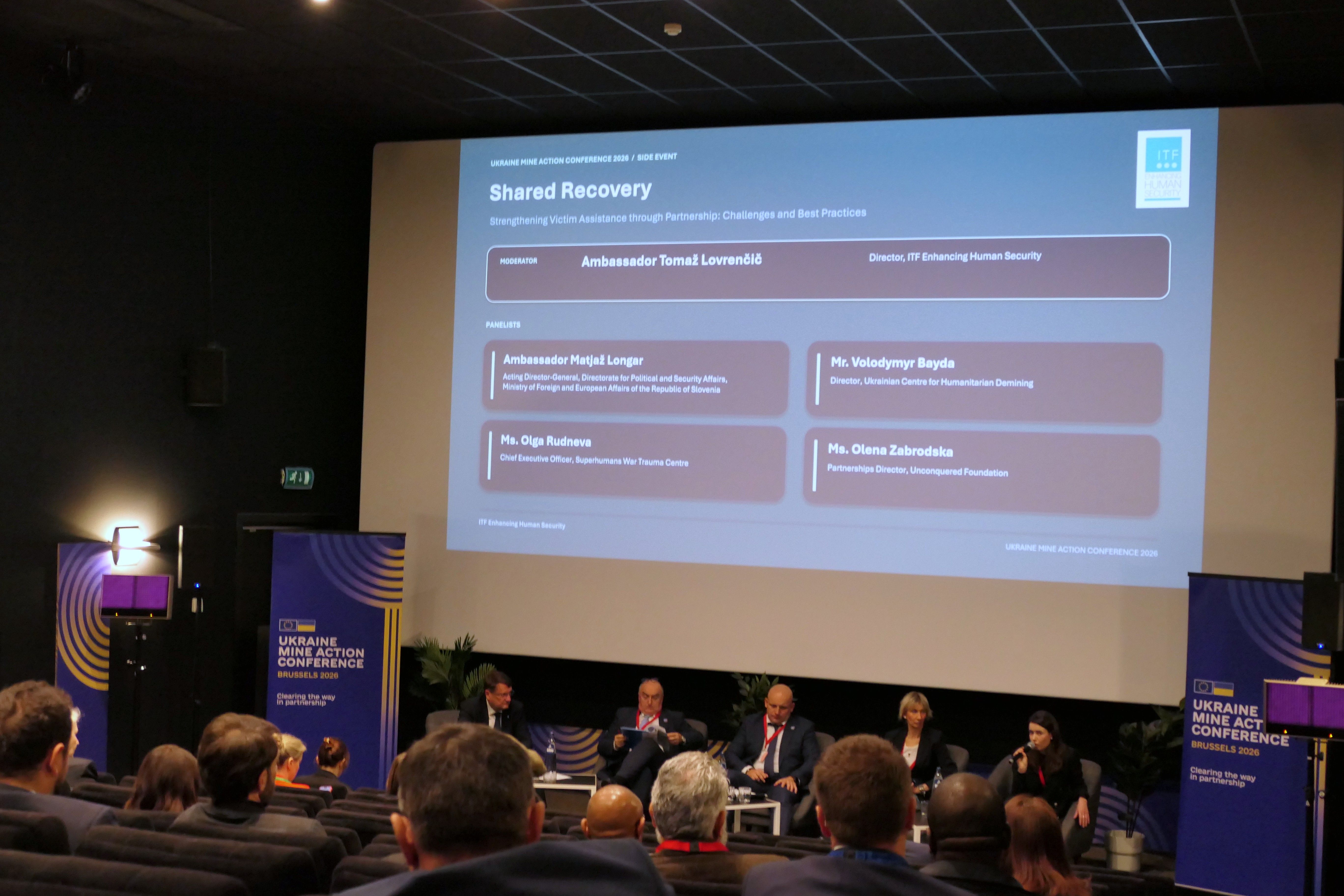
On 18 November 2026, ITF Enhancing Human Security organised a partner side event titled Shared Recovery: Strengthening Victim Assistance through Partnership – Challenges and Best Practices as part of the Ukraine Mine Action Conference 2026 in Brussels, Belgium.
The Ukraine Mine Action Conference (UMAC) is a key international initiative to advance humanitarian mine action in Ukraine, which is essential to the country’s recovery, security and resilience. It brings together national and international partners to share experiences, address the humanitarian consequences of mines and explosive remnants of war, and strengthen support for people and communities affected by these threats.
The discussion focused on an essential dimension of mine action: supporting people affected by mines and explosive remnants of war long after contaminated areas have been cleared. Survivors and their families may require continued access to medical care, physical rehabilitation, prosthetic services, mental health and psychosocial support, education and opportunities for social and economic participation. Addressing these needs requires sustained cooperation across sectors and institutions.
Moderated by Ambassador Tomaž Lovrenčič, Director of ITF, the panel brought together perspectives from Ukraine’s national mine action sector, local organisations delivering victim assistance and the international donor community. The panellists were Volodymyr Bayda, Director of the Center for Humanitarian Demining; Olga Rudneva, Chief Executive Officer of the Superhumans War Trauma Centre; Olena Zabrodska, Partnerships Director of the Unconquered Foundation; and Ambassador Matjaž Longar, Acting Director-General of the Directorate for Political and Security Affairs at the Ministry of Foreign and European Affairs of the Republic of Slovenia.
A central part of the discussion was how to ensure that support responds to Ukraine’s actual needs and priorities. National institutions have a key role in identifying gaps, coordinating services and building systems that can support survivors over time. International partners can contribute expertise and resources, but their support is most effective when it strengthens national capacities and responds to priorities identified in the country.
The discussion also highlighted the importance of sharing responsibility among donors. Victim assistance covers a wide range of needs and requires sustained support. No single donor can address them all. When donors coordinate their contributions and support complementary activities, they can help reach more people and make better use of available resources. ITF’s work in Ukraine is supported by multiple donors, reflecting the value of bringing different contributions together.
“We speak about our donor’s help, economical effectiveness, but victim assistance must be one of the main parts of all programs.” Said Volodymyr Bayda.
Local organisations are essential to turning these priorities into support that reaches survivors and their families. Through their work with ITF, the Superhumans War Trauma Centre and the Unconquered Foundation contribute to victim assistance and recovery in Ukraine. Their experience highlighted the importance of connecting medical and physical rehabilitation with psychological support, adaptive sports and opportunities for social participation. Recovery is not limited to treatment; it also means helping people regain independence, confidence and a place in their communities.
“We need to fully invest in the expertise that we’re developed during these programs,” emphasised Olena Zabrodska. “Behind all the programs are a lot of methodologies that we create in partnership with local organizations and with international partners, and we need to preserve this expertise and share it among all of us who work in the sector in Ukraine.”
“Whatever is innovated at the front lines, we have to counter-innovate at the healthcare sector. Because it significantly impacts the way we work with the trauma.” Said Olga Rudneva.
The exchange reinforced that victim assistance is a shared responsibility. National institutions, local organisations and international donors each bring different capacities and experience. Working together, they can help ensure that support is coordinated, responds to survivors’ needs and contributes to recovery well beyond the end of clearance operations.
ITF extends its appreciation to the European Union and Ukraine for co-hosting UMAC26, to Belgium for its partnership, and to the European Commission for organising the conference and bringing the mine action community together.