Supporting Displaced Families in northern part of Syria with Food and Risk Awareness
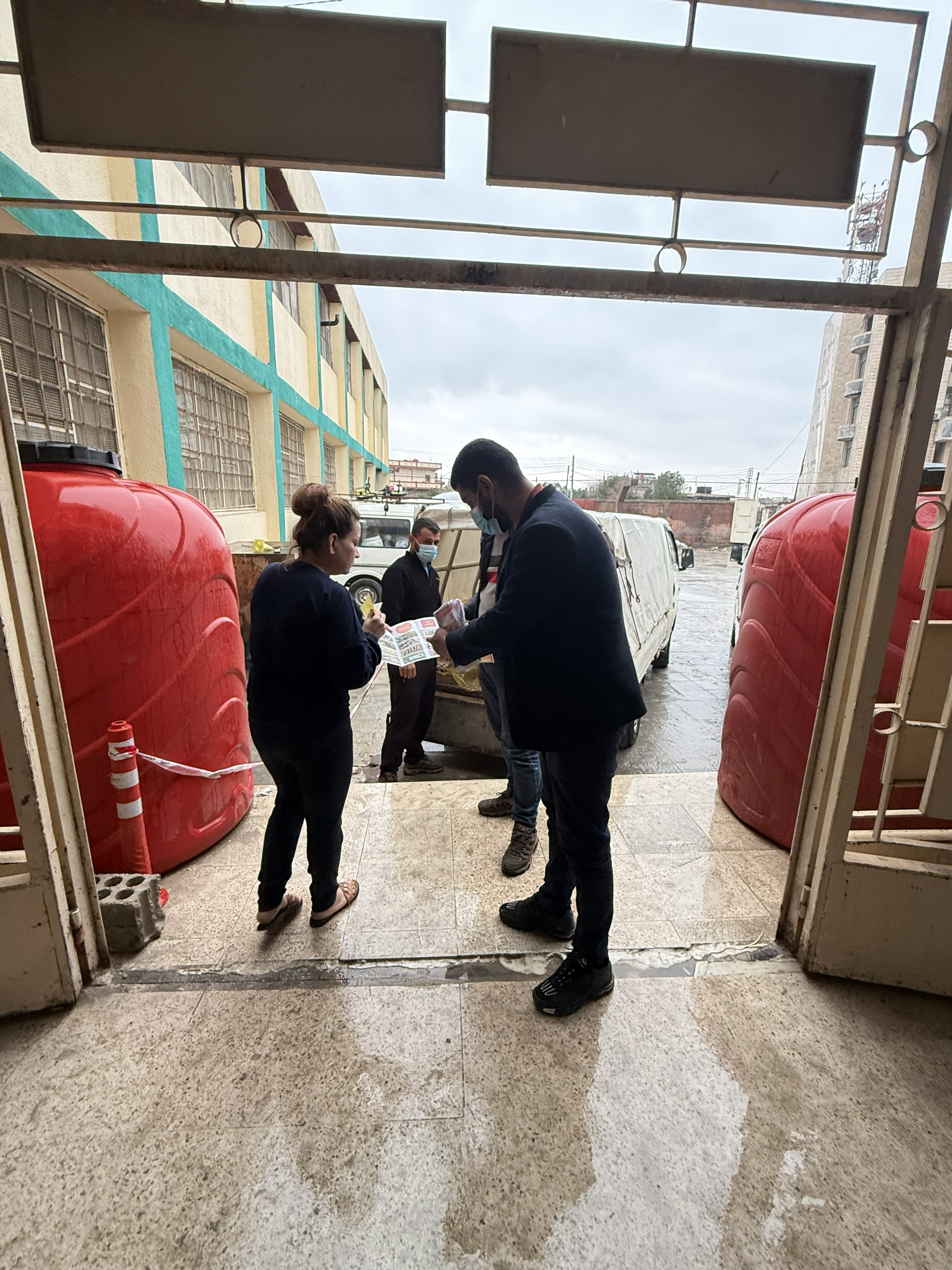
In early 2026, new waves of displacement in the north-east of Syria led to the opening of additional collective centres in Qamishli, hosting families who had already been displaced multiple times. Many arrived from Afrin and Kobani, while others had most recently fled Raqqa, Tabqa and Sheikh Maqsood, often leaving behind homes, livelihoods and stability once again.
For these families, daily life is shaped by uncertainty. Access to basic necessities such as food is not guaranteed, and the pressure of displacement continues to affect every aspect of their lives. A rapid needs assessment conducted across eight collective centres, in coordination with humanitarian actors, confirmed an urgent need for food assistance.
In response, ITF, together with its local partner Reachout, delivered food assistance to 205 internally displaced families in Qamishli. Each household received a food basket designed to cover essential needs, including staple items such as rice, beans, lentils and canned food, along with cooking essentials such as oil and tomato paste. Eggs and other basic items ensured that families had access to immediate, practical nutrition.
Alongside food assistance, explosive ordnance risk education (EORE) materials were also distributed, accompanied by short explanations. In a region affected by contamination from explosive remnants of war, this information is critical. For families who move frequently or return to unfamiliar areas, understanding how to recognise and avoid potential hazards can help prevent accidents and save lives.
The distribution was carried out in an organised manner, with teams providing guidance and managing feedback. All 205 households received full food baskets, and waiting times remained under 30 minutes, with priority given to vulnerable groups. Beneficiaries were informed about complaint mechanisms, and some suggested cash assistance or the inclusion of hygiene kits in future support.
While such assistance addresses immediate needs, it also highlights the broader challenges faced by displaced communities. Repeated displacement, loss of income and limited access to services leave families in a constant state of vulnerability, where even basic support can make a meaningful difference.
This activity was implemented by Reachout and funded by the Slovenian Ministry of Foreign and European Affairs. ITF expresses its appreciation to its local partner for the effective and professional delivery of assistance, and to Slovenia for its continued support in addressing urgent humanitarian needs and helping protect vulnerable communities.