Good News Story From: Syria - Humanitarian Duty to Leave and Return
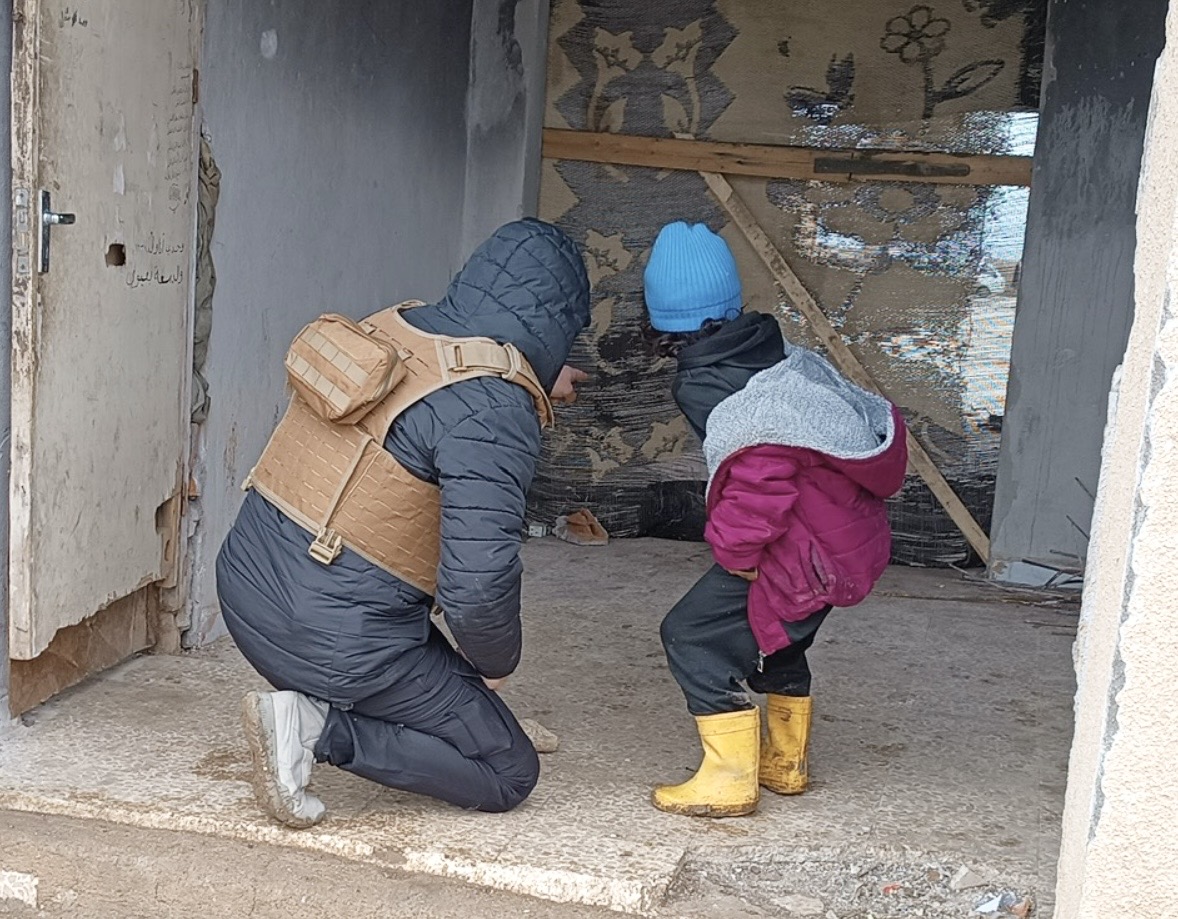
In Hasakah, northern Syria, as the security situation deteriorated and opposition forces advanced towards the city at the beginning of the year, we ceased operations and sent every one of our deminers home to their families. It was the right decision – but by no means an easy one.
At the time, our localisation programme under ITF Enhancing Human Security, delivered through our local partner Reachout, was fully operational. Clearance tasks were ongoing. Explosive hazard assessments were being conducted. Risk education was reaching communities living daily with legacy explosive hazards from previous conflicts. The work was real, active, and urgently needed. But humanitarian action must never come at the expense of humanitarian lives.
As a humanitarian mine action technical advisor, my responsibility goes beyond technical standards and planning. It includes ensuring that duty of care is absolute – especially when the pressure to “push on” is at its greatest. When the operating environment crossed the threshold from dangerous to unpredictable, we suspended operations. Sites were closed properly. Equipment was secured. Teams were sent home – alive.
Shortly afterwards, I evacuated to the Kurdistan Region of Iraq.
Leaving Hasakah under such circumstances is never a moment of relief. It is a moment of responsibility that stays with you. You leave knowing the work is unfinished, knowing the need remains, and knowing the people you trust most are now scattered across a fragile landscape, waiting. The threats are palpable, and the uncertainty is a killer.
In the weeks that followed, the situation in Syria worsened. More than 157,000 people were displaced by renewed hostilities. Families fled with little notice, settling wherever shelter could be found – unfinished buildings, overcrowded mosques and community centres, many of them contaminated with unexploded ordnance and explosive remnants of war.
This is where the story could easily have ended – with delay, uncertainty and the erosion of momentum that conflict so often brings.
But that is not what happened.
Operating remotely, our focus was clear: the programme could not stall or lose its edge. Daily contact with demining teams continued. Welfare checks were maintained. Planning for re-entry ran in parallel with the honest acceptance that timelines were uncertain. We also used the pause exactly as it should be used – to prepare. Knowing the IED threat in NES was significant, we ensured specialist readiness so that when access allowed, support could resume immediately and responsibly.
While this was happening in the background, something else unfolded on the ground.
Despite adverse weather, deep mud and severely restricted movement, our demining teams made the decision to return to operations. Not because conditions were safe, but because civilians were at immediate risk. The first report concerned unexploded ordnance inside a family’s room.
Not near the house. Not outside the compound. Inside the space where displaced people were sleeping.
The team responded immediately, assessed the threat and safely removed the ordnance. As so often happens in humanitarian work, once one family felt safe, others found the confidence to speak. More reports followed – explosive items in neighbouring homes, in open ground and buried in sewage pits next to residential buildings, places where children play and daily life tries to resume.
The teams did not withdraw. They stayed. They worked. They cleared.
Then came a moment that none of us will forget.
A young child approached the Reachout team leader carrying an intact improvised explosive device.
The situation was stark and confronting. The team leader did exactly what professionalism demands under impossible circumstances. He documented the device and contacted us immediately. Using the imagery provided, we assessed the device remotely and confirmed it was safe to move.
This was a deviation from standard procedures. But conflict rarely presents itself neatly, and sometimes protecting life requires calm judgement and controlled flexibility rather than rigid adherence to process.
That moment became a turning point.
It reinforced the urgency of the threat and triggered immediate, targeted explosive ordnance risk education. Families were engaged directly with one clear message:
Never touch, move or approach any suspected explosive item, no matter how familiar or harmless it may appear.
By the end of the intervention, hundreds of explosive hazards – rockets, mortar rounds, artillery projectiles, warheads and the improvised explosive device itself – had been removed from civilian living areas. Every item represented a life potentially saved.
This work did not happen under ideal conditions. It happened in mud, under pressure and with real risk. It happened because trained staff, supported by a wider humanitarian network, chose responsibility over fear. This is humanitarian mine action at its most honest.
In the coming days, we returned to Syria to stand shoulder to shoulder with these teams again. Access remains complex and uncertainty persists. What does not change is the professionalism, integrity and determination of the people delivering this life-saving work.
Humanitarian mine action is often measured in numbers. Sometimes, it is measured in a single moment – when a child walks in holding an IED, and a team is ready to respond.
*Name changed for security reasons.
ITF expresses its appreciation to the French Ministry for Europe and Foreign Affairs and Slovenian Ministry for Foreign and European Affairs for their support and to all partners and donors whose cooperation enables this work.