Strengthening Psychosocial Support for Children in Ukraine
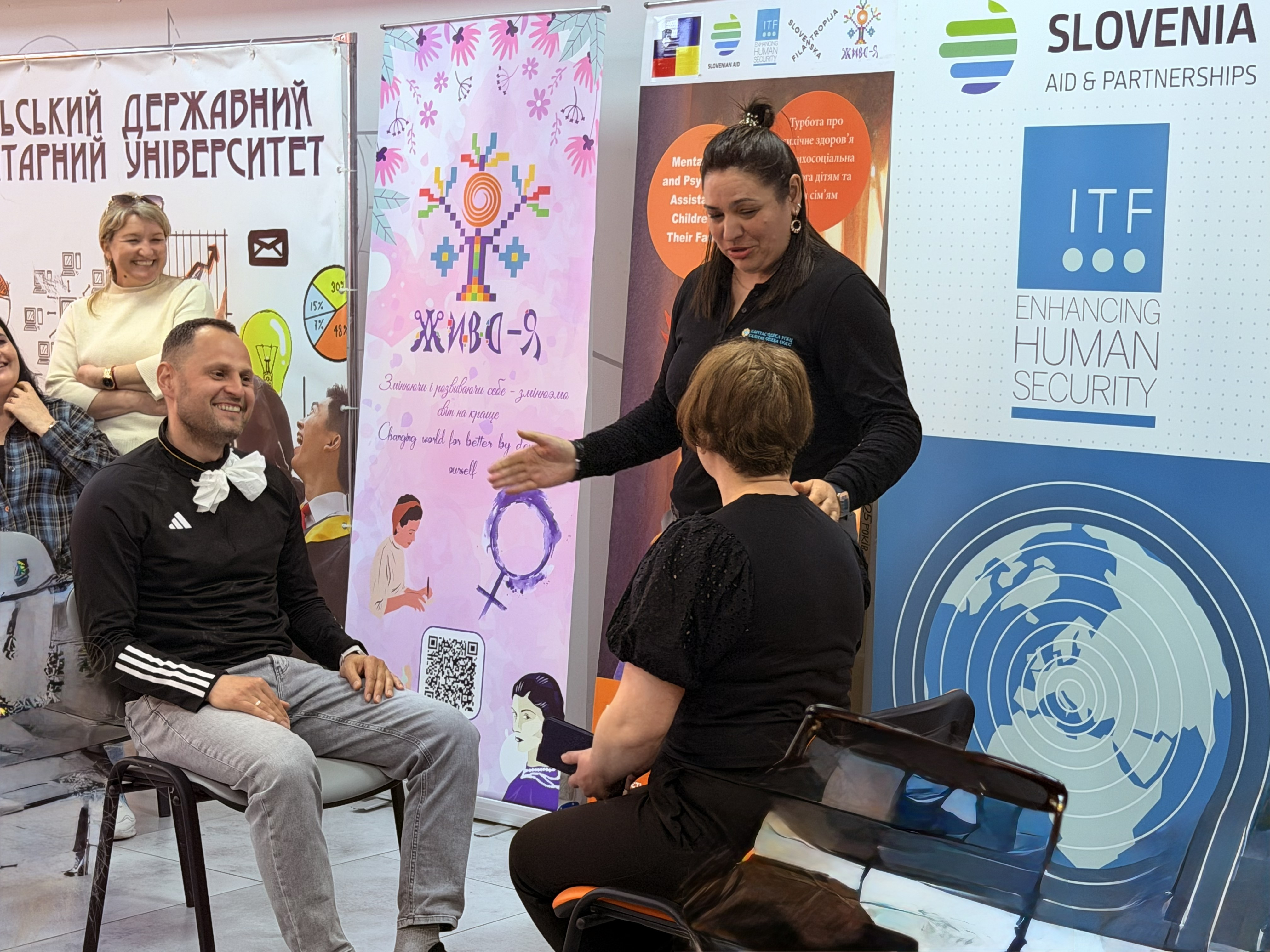
In Ukraine, years of ongoing conflict continue to shape the lives of children and their families in profound ways. Displacement, uncertainty and prolonged stress have become part of everyday life, affecting not only children’s wellbeing, but also family dynamics, learning environments and the ability of communities to cope.
In the Odesa region, many families have been forced to relocate and rebuild their lives under difficult conditions. For children, this often means adapting to new schools, new surroundings and new realities, while carrying the emotional weight of conflict. Teachers and mental health professionals are frequently the first to recognise these challenges, yet they too face increasing pressure as they work to support children while managing complex communication with families.
In response to these growing needs, ITF, together with Slovene Philanthropy and local partner NGO “Zhiva-Ya,” delivered a training in Izmail from 21 to 25 April 2026 as part of the project “Mental Health and Psychosocial Assistance to Children and Their Families.”
Now in its third year, this initiative continues to provide a platform for educators and mental health professionals to strengthen their knowledge, exchange experience and build practical skills for supporting children and families affected by war. This year’s training brought together 135 participants - a significant increase from previous sessions - reflecting the rising demand for psychosocial support and the urgency of addressing these challenges.
The programme combined a Training of Trainers component with a broader training for teachers and specialists, ensuring that knowledge can be further shared and applied across schools and communities. The focus was placed on real-life challenges participants face in their daily work, particularly communication with parents in situations shaped by stress, displacement and uncertainty.
The training also featured an online lecture by dr. Anica Mikuš Kos, who shared her extensive experience in supporting children affected by conflict and trauma, further enriching the programme with valuable insights and practical approaches.
Through group work and guided discussions, participants explored complex scenarios drawn from their own professional experience, identifying constructive ways to manage conflict and build trust. These situations were further developed through role-play exercises, allowing participants to test approaches in a safe environment and reflect on effective strategies together.
Such practical, experience-based learning is essential in a context where families continue to cope with prolonged stress and uncertainty. As tensions and misunderstandings become more common, teachers are often required to balance education with emotional support for both children and parents. Strengthening their ability to manage these challenges has a direct impact on children, helping create safer, more supportive environments where they can feel understood and continue their learning.
In the context of the ongoing war, initiatives like this play a critical role in reinforcing local capacity and ensuring that support reaches children where they are – in schools, communities and everyday interactions. While the needs remain significant, strengthening the people who provide care and guidance is an essential step toward helping children navigate uncertainty and build resilience.