Good News Story From: Syria - The Long Road Home
For most of us, the idea of going home is something we take for granted.
We know where home is. We know the road that leads there. We know that, however difficult life might become, we can usually open the door and step back inside.
For hundreds of families from Sere Kaniye - Ras Al-Ain - and its surrounding villages in northern part of Syria, that certainty disappeared years ago.
Conflict forced them from their homes and into displacement. Many have spent seven or eight years living away from the houses, fields, streets and communities that once defined their everyday lives.
Years of waiting. Years of uncertainty. Years of not knowing whether the home they left behind was still standing, whether their land could ever be worked again, or whether they would ever be able to take their children back to the place they came from.
For many, life continued in IDP camps and temporary accommodation.
Displacement is difficult at any time. In the height of the Syrian summer, when the scorching temperatures become unbearably punishing, even the ordinary routines of family life can become exhausting. Privacy is limited. Families live with uncertainty about what comes next. Children grow up somewhere their parents never intended to raise them. And always, somewhere beyond the camp or school where they were staying, was home. Not necessarily a home they could safely reach. But home nonetheless.
Then, in August 2026, something changed.
Approximately 30,000 people were preparing, over time, to return to Sere Kaniye and its surrounding areas. For the first group of 647 families, the possibility they had lived with for years was finally becoming real.
They might actually be going home.
But in northern part of Syria, returning after conflict carries a danger that cannot always be seen. Landmines do not disappear when a family is displaced. Improvised explosive devices do not become harmless because the fighting has moved elsewhere. Unexploded ordnance does not know that a war has ended.
It simply remains. Beside roads. In fields. Around houses. Along tracks that children once walked to school. In places that, years earlier, were part of ordinary life.
So before those families could make the journey home, other people first had to go ahead of them.
That work fell to the mine action organisations.
ITF supported Reachout’s Non-Technical Survey teams worked with local communities, authorities and people who possessed first-hand knowledge of areas affected by the conflict. They gathered information about suspected hazards, former military activity, incidents involving explosive ordnance, agricultural land and the routes people had previously used. That information was assessed and cross-checked so that the areas most likely to affect returning families could be prioritised.
Then came Technical Survey.
Information gathered from communities had to be tested against what actually existed on the ground. Suspicion became verification. And verification allowed clearance efforts to be directed towards those roads and locations that mattered most to the people preparing to return.
Then came the deminers. There is something deeply humbling about watching a deminer work when you know who is going to walk behind them. The task itself is slow and deliberate. Metre by metre. Procedure by procedure. In the fierce heat of a Syrian summer, wearing protective equipment, concentrating constantly and knowing that mistakes around explosive ordnance can have immediate consequences.
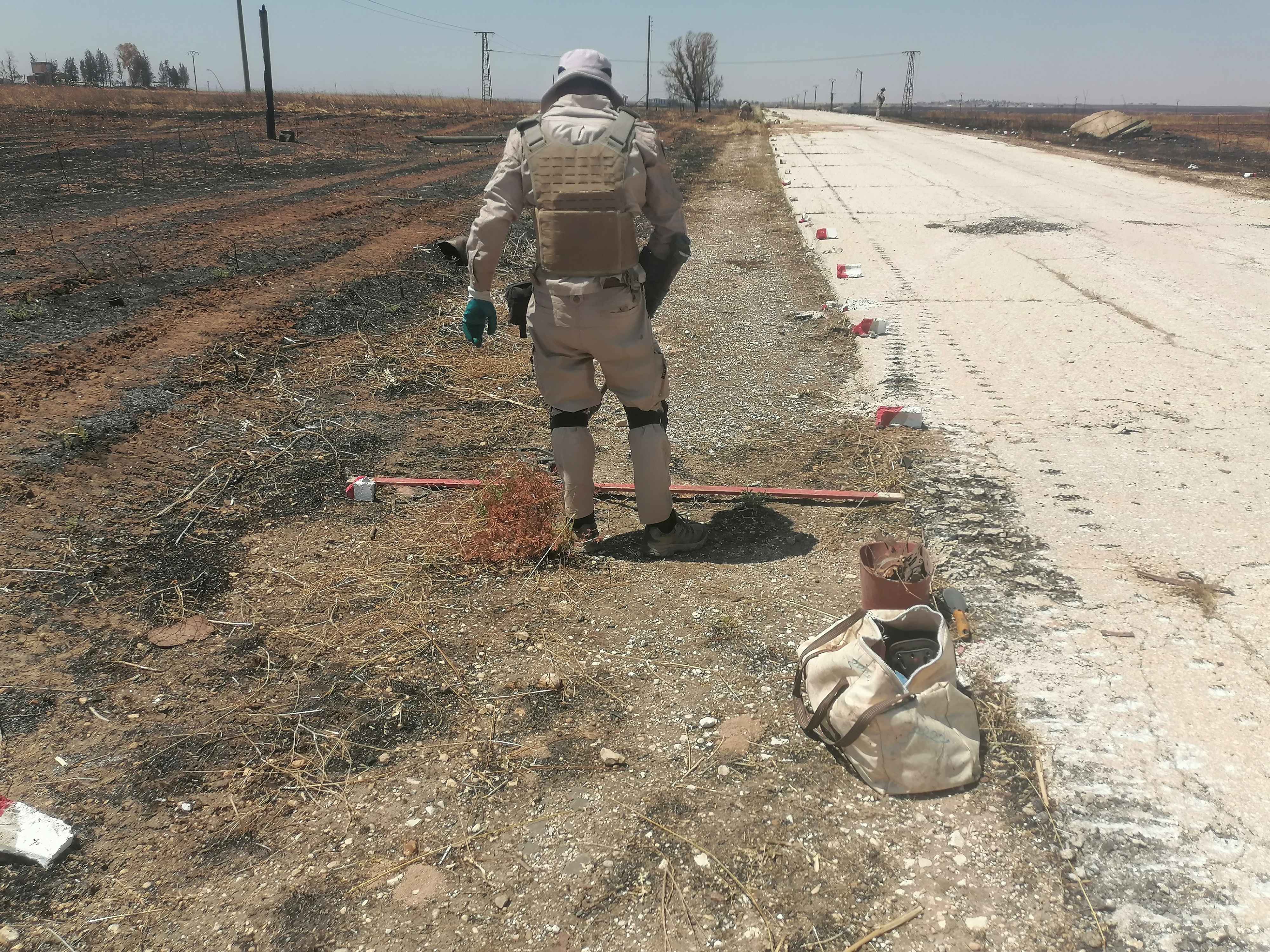
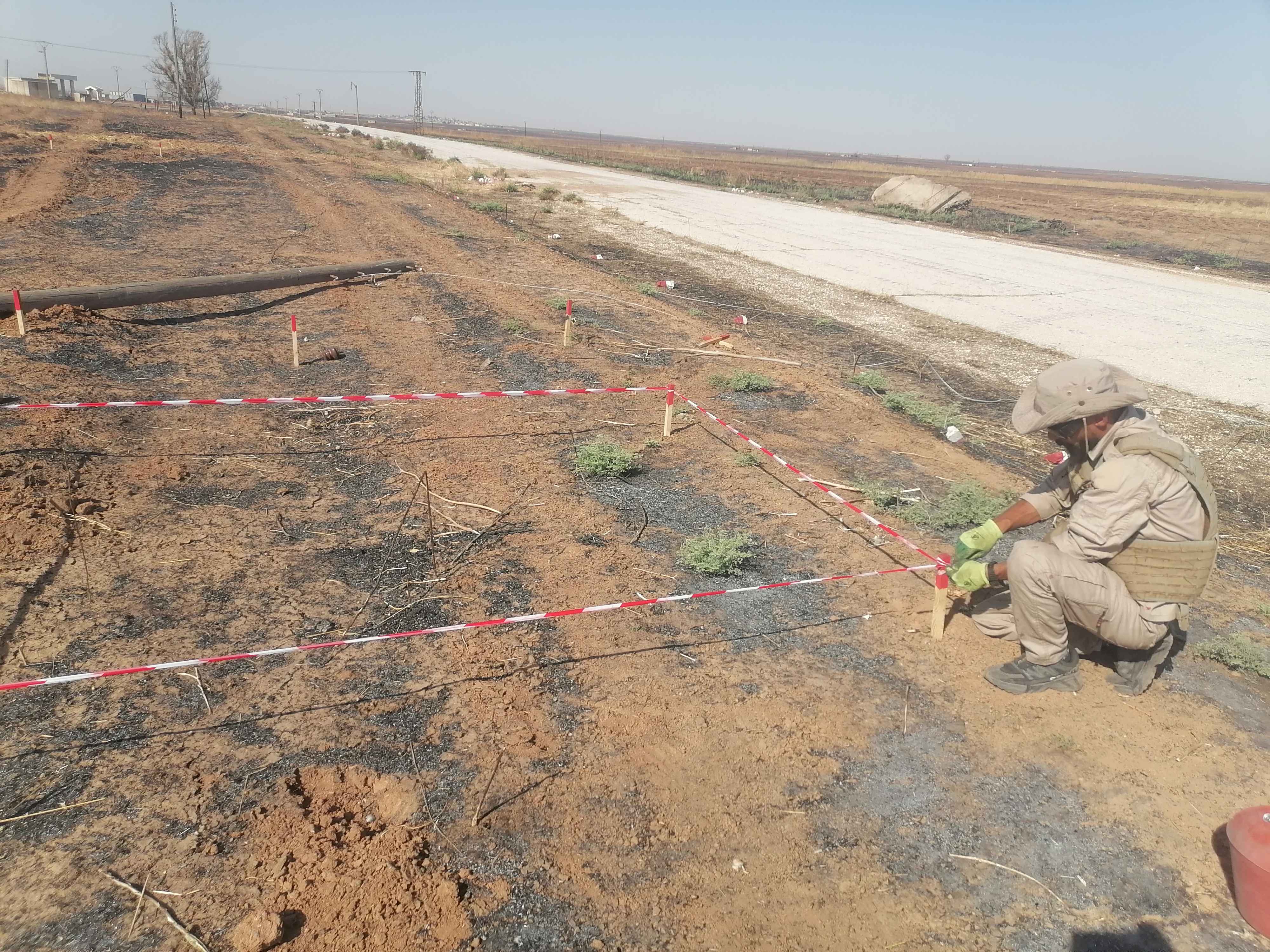
From a distance, it is easy to describe clearance in square metres. Standing beside it, you see something different. You see somebody carefully working the ground because, perhaps a few days later, a family may travel across exactly the same place. A father may drive his children along that road. A farmer may return to his land. A mother may walk towards a house she has not seen for years. That’s what sits behind the statistics.
Then, on 5 August, came the announcement that displaced people would begin returning from 10 August. Suddenly, there were only days.
And there was another difficult reality. Clearing priority routes could significantly reduce the threat, but it could not possibly mean that every house, field, garden, roadside and track throughout the wider area was free from explosive hazards.
So together with Reachout we made a Plan B.
If every hazard could not be removed before the families returned, then the knowledge that might prevent somebody becoming a casualty had to reach them before they left. An emergency Explosive Ordnance Risk Education response was launched alongside the survey and clearance activity already underway.
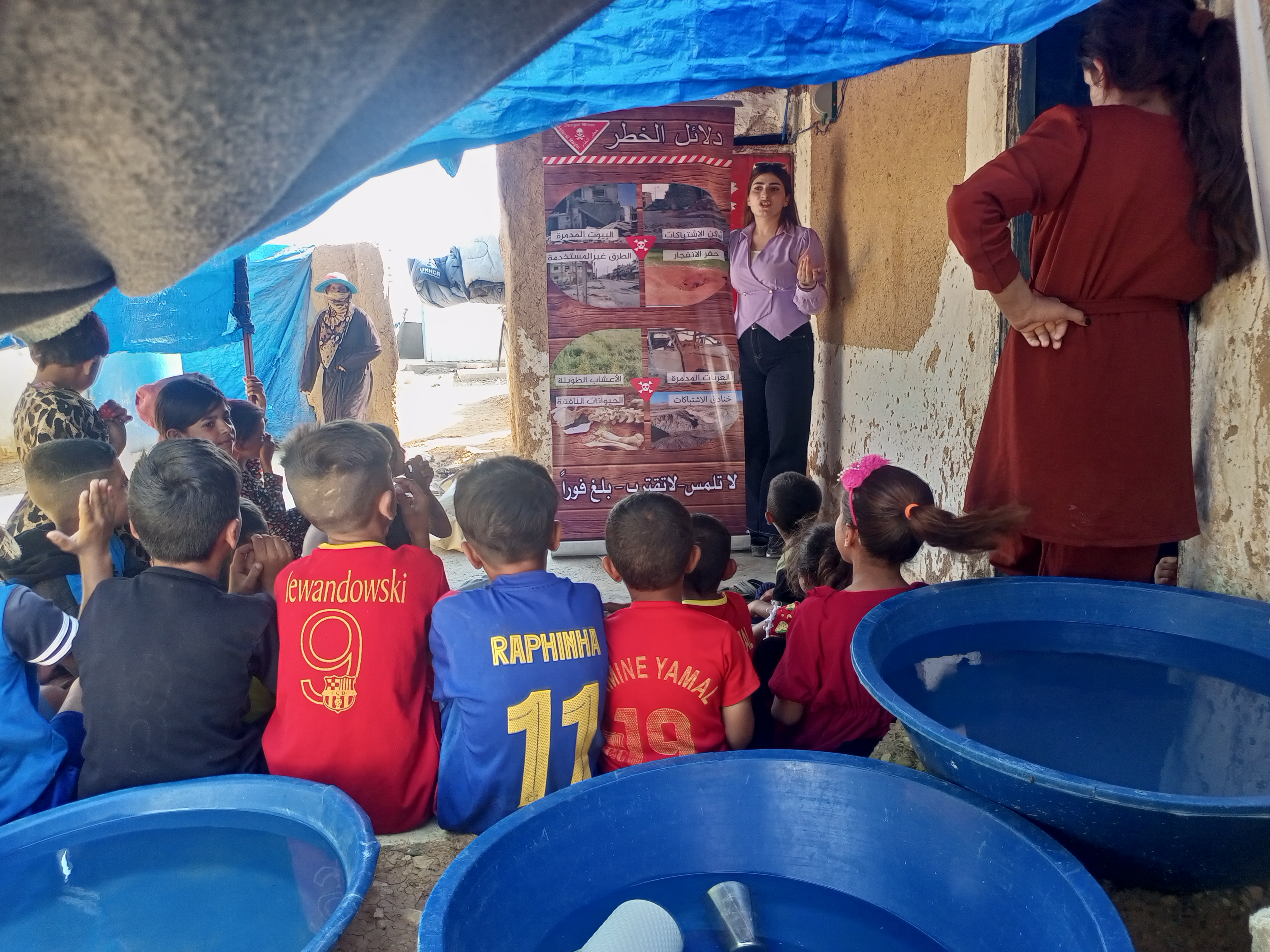
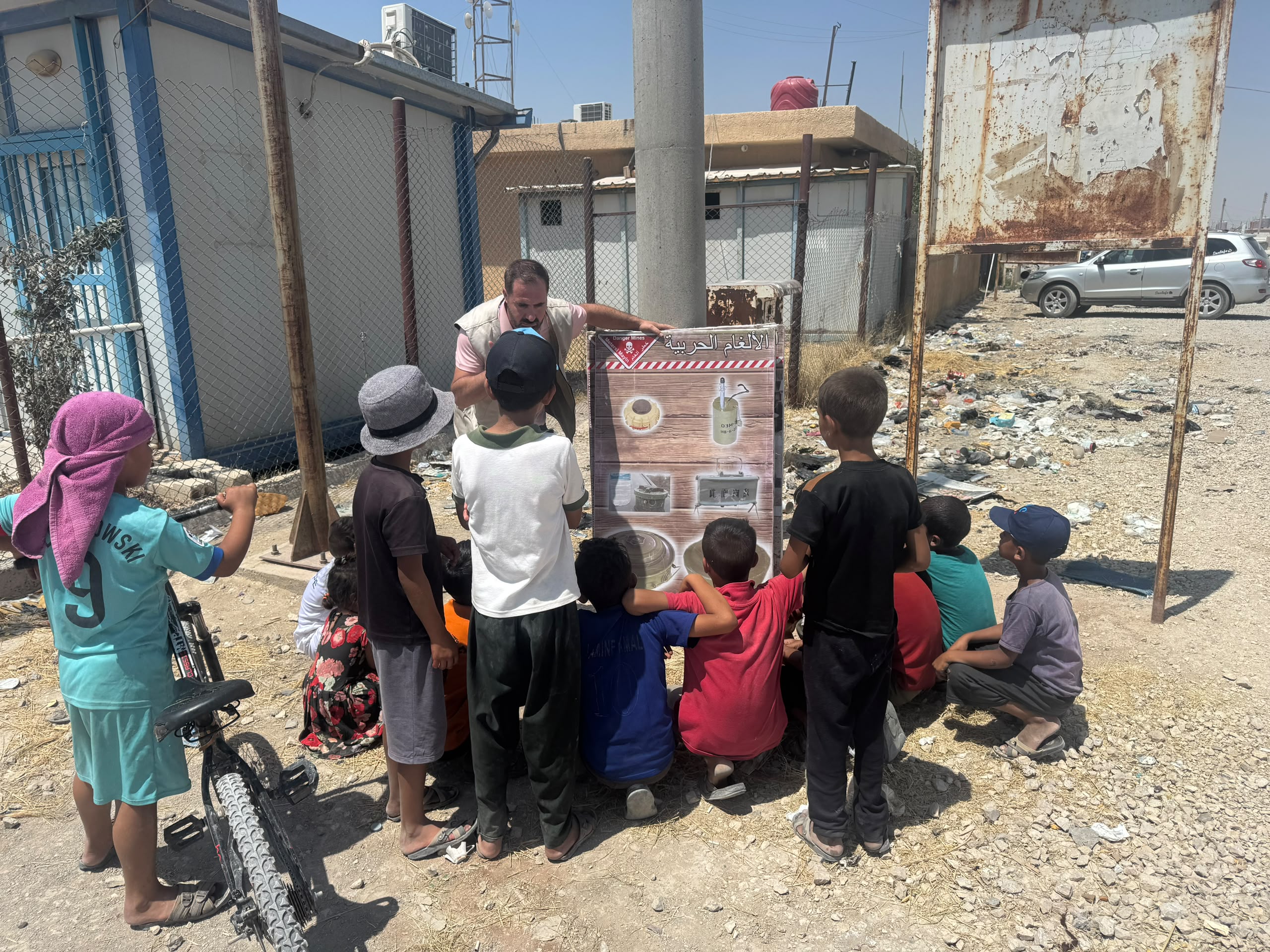
What followed was a remarkable effort.
Reachout’s Operations Manager and the Security Manager coordinated with local authorities, the security actors responsible for organising the return, the Sere Kaniye Displaced Persons Committee, camp administrations, schools and NESMAC (a northern branch of Syrian National Mine Action Center). The objective was straightforward but urgent: find the people who were going home and reach them before they left.
The first group consisted of 647 families, spread across three IDP camps and 16 schools in Al-Hasakah Governorate. Reachout’s EORE teams went to them; and on 6 August, they delivered 45 sessions, reaching 1,328 people and distributing 650 awareness leaflets. They also trained 25 Community Focal Points.
On 9 August, they went out again.
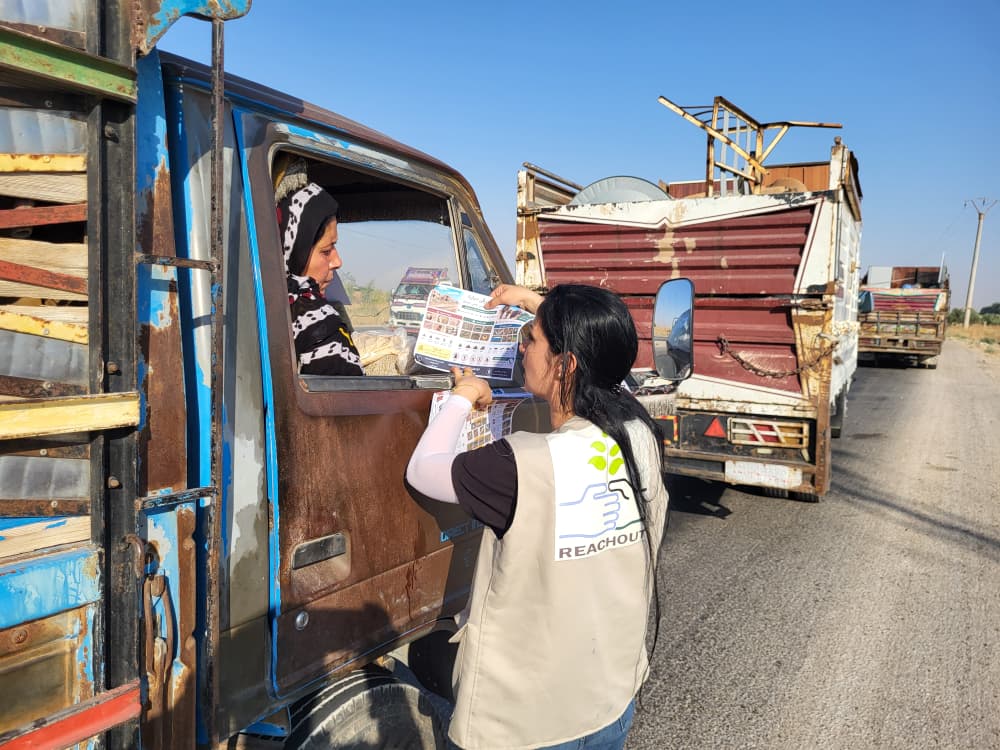
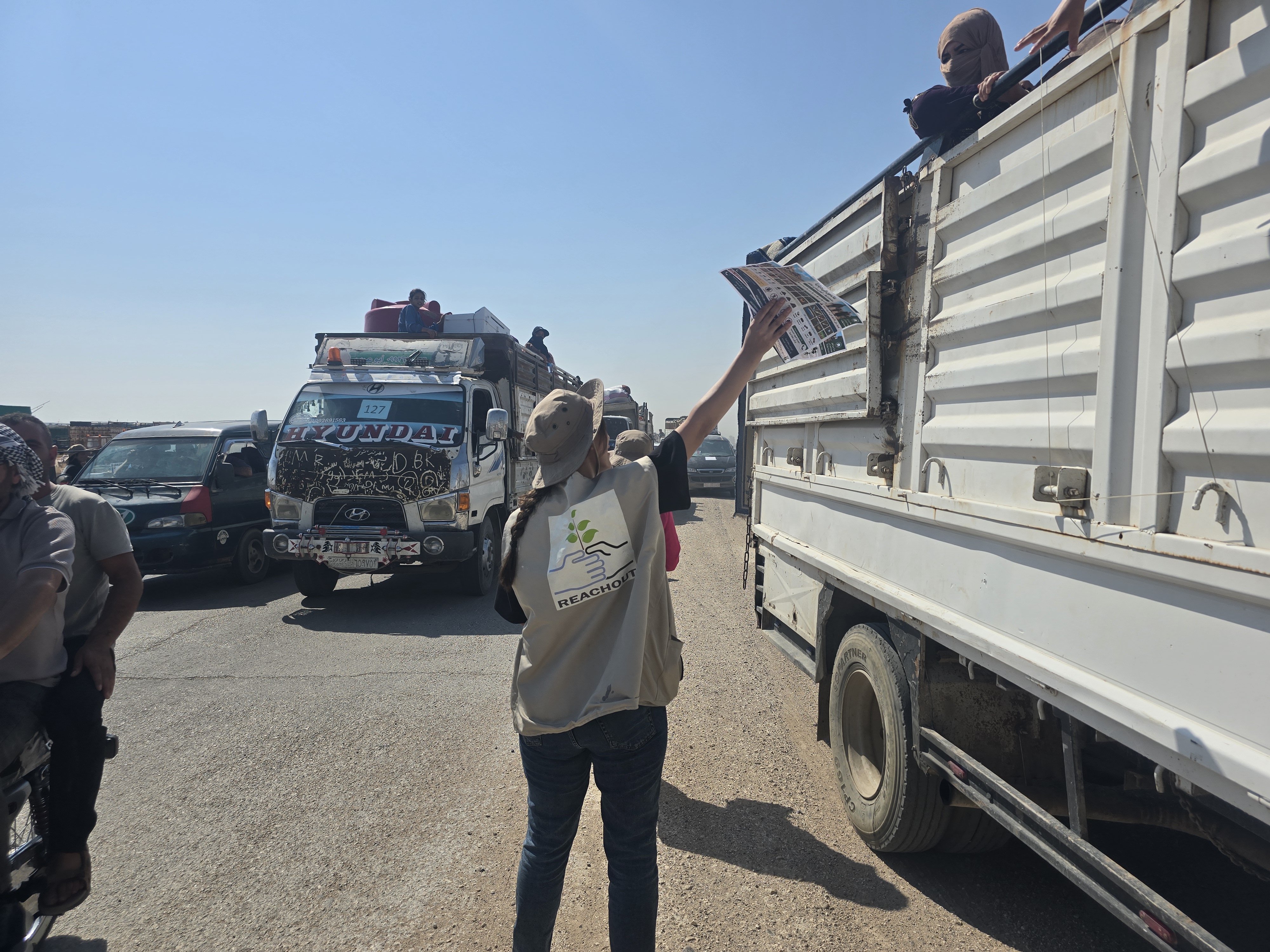
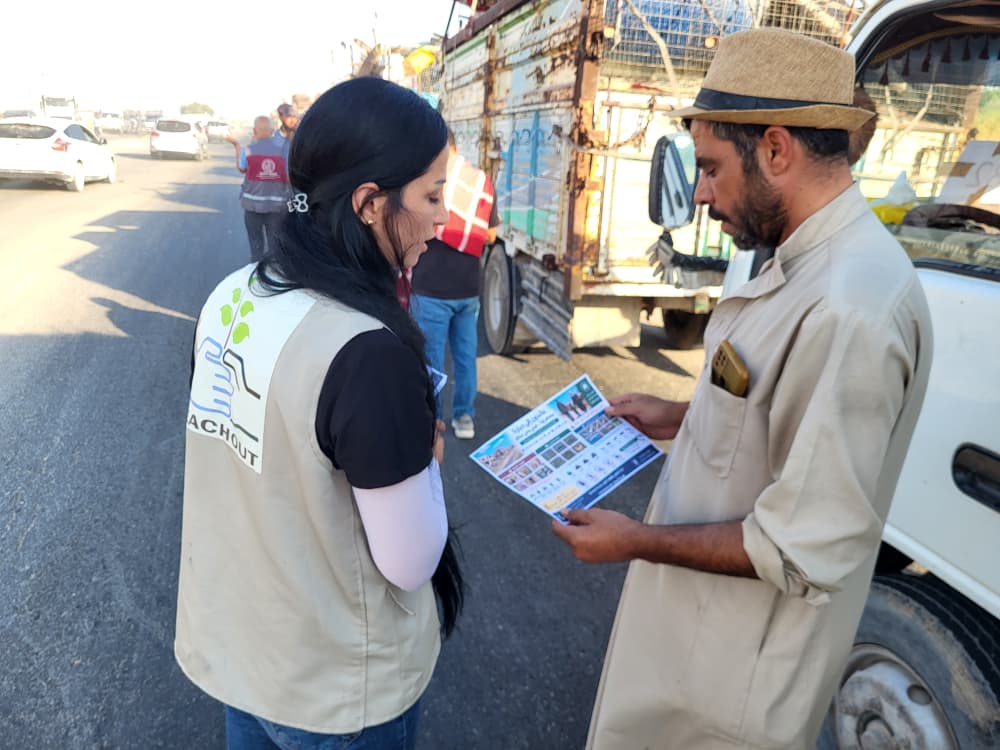
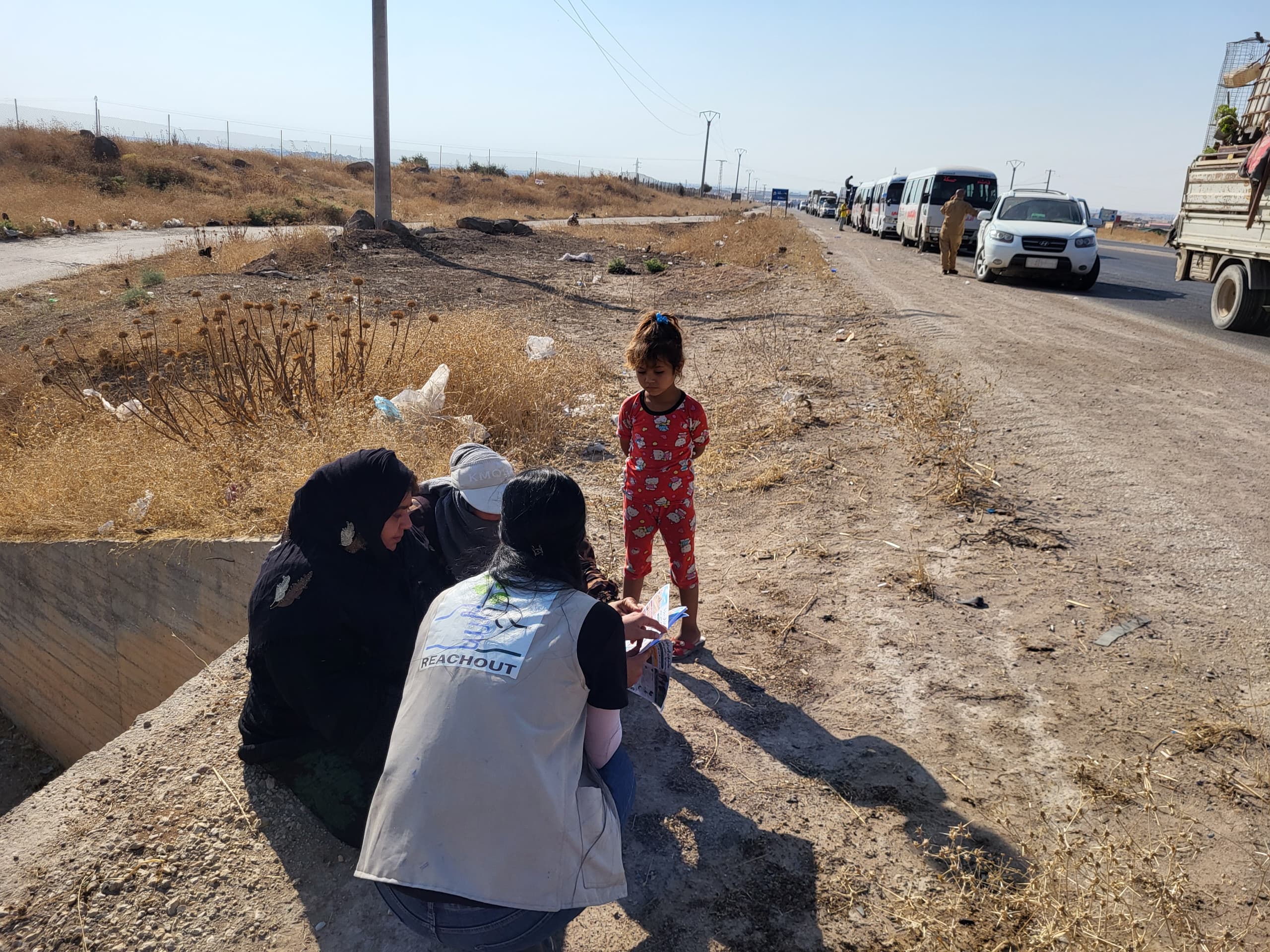
Another 24 sessions. Another 756 people reached. Another 297 awareness leaflets distributed. Another six Community Focal Points trained. Across those two days, the teams delivered 69 EORE sessions to 2,084 people, distributed 947 awareness leaflets and trained 31 Community Focal Points.
Those are impressive numbers, but imagine them differently…
…Imagine 2,084 people who, only days later, might be standing outside houses they had not entered for years. Parents trying to keep children safe in places that are both familiar and unfamiliar at the same time. A farmer looking across land he remembers intimately, while knowing that years of conflict may have changed what is hidden beneath it. A child finding something metallic in the ground and having to make the most important decision of their young life:
Do I touch it? Do I pick it up? Or do I remember what I was told?
That is why EORE matters. Sometimes the difference between an accident and a family continuing with its day is a single piece of information remembered at exactly the right moment.
Do not touch. Do not approach. Move away. Tell somebody. Simple messages with potentially life-saving consequences.
And then something particularly important happened.
The families themselves began contributing to the process. Some of those preparing to return possessed detailed knowledge of suspected hazardous areas. Some knew where mines or other explosive threats had previously been seen. Some had even retained video footage showing hazardous locations.
The people returning home were not simply beneficiaries. They were becoming part of the mine action response.
Suitable individuals were trained as Community Focal Points so they could continue reporting hazards, sharing information and reinforcing safer behaviour within their own communities after the return had taken place.
There is something very powerful in that.
Humanitarian mine action is at its strongest when communities are not treated simply as people waiting for somebody else to make them safe. They are listened to. Their knowledge matters. Their experience matters. And ultimately, they become part of protecting their own communities.
Then came 10 August, the day the first families had been waiting for.
At the departure point, the work continued until almost the last possible moment. ITF-Reachout EORE personnel moved amongst the vehicles distributing awareness material before families set off. The photographs capture it beautifully. Vehicles lined along the road. People preparing to leave the places where they had lived through years of displacement. Possessions packed for a journey that was, in reality, much greater than the distance between two locations. Because this was not simply another movement of displaced people. For years, these families had lived with the consequences of having been forced away from home. Now they were travelling back towards it.
Behind that convoy was an extraordinary amount of work.
There were the local people who shared the first pieces of information. The NTS teams who listened to them and built the picture of contamination. The Technical Survey personnel who helped verify what was actually on the ground. The EORE teams moving rapidly between camps and schools to reach families before they left.
The Community Focal Points willing to take responsibility within their own villages. And the deminers themselves, doing the difficult and unforgiving work of physically removing explosive hazards from priority routes.
And behind every field team stands another team.
Drivers getting people safely to difficult and sometimes remote locations. Medics ensuring that operational teams deploy with the medical support they require. Logistics and administrative staff making sure vehicles, equipment, permissions and resources come together when they are needed. National managers coordinating people and priorities in an environment where circumstances can change extremely quickly. ITF Humanitarian Mine Action Technical Advisers working alongside Reachout personnel, clearing IEDs, helping strengthen technical standards, operational capability, leadership, quality and confidence so that national capacity continues to grow.
And behind all of us in Syria are our colleagues at ITF Headquarters. They may be thousands of kilometres from the road to Sere Kaniye, but the programme management, donor engagement, administration and support undertaken there is part of every successful field activity.
Most of those people will never appear in the photograph of the convoy, but every one of them contributes to the reason that convoy could move.
And above all of them are the people whose support makes the work possible in the first place. Our donors.
The return on 10 August did not mean the work was finished. That is important.
As people re-enter villages, fields and properties that have been inaccessible for years, new information will emerge. Previously unknown hazards may be discovered. Suspicious items will be reported. Survey will continue. Clearance will continue. EORE will continue. The Community Focal Points will continue providing an essential link between mine action teams and the returning population. There is still much to do.
But that should not diminish what happened this week.
For the first 647 families, after years of uncertainty, something fundamental changed.
The road no longer led away from home. It led back towards it.
Perhaps that is ultimately the best way to understand what ITF and Reachout are trying to achieve in Syria. Mine action is about explosive ordnance, but it is also about everything that becomes possible when that ordnance is removed. A road becomes a journey again. A field becomes a livelihood. A house becomes a home. A village becomes a community. And a displaced family becomes, once again, simply a family living where it belongs.
For people who have spent seven or eight years wondering whether that day would ever come, there can surely be few better measures of humanitarian success.
*Names changed for security reasons.
ITF expresses its appreciation to the French Ministry for Europe and Foreign Affairs and Slovenian Ministry for Foreign and European Affairs for their support and to all partners and donors whose cooperation enables this work.