ITF Brings Humanitarian Focus to the MSC 2026
On 13 February 2026, ITF hosted a high-level discussion at Ukraine House, this year’s new addition to the Munich Security Conference, dedicated to supporting victims of the war in Ukraine. Bringing a humanitarian perspective into a forum best known for geopolitical and security debates was both timely and necessary – a reminder that security must ultimately be understood through the lives and wellbeing of people affected by conflict.
The panel featured Ms. Olga Rudnieva, CEO of the Superhumans Center in Kyiv; Dr. Aleš Musar, spouse of the President of Slovenia; and Dr. Martin Schuldes, Head of Division “Peace and Security”, Federal Ministry for Economic Cooperation and Development (BMZ). The discussion was moderated by Amb. Tomaž Lovrenčič, Director of ITF Enhancing Human Security. Speakers shared practical experiences and stressed that, alongside physical rehabilitation, long-term psychological care, community support, and inclusive services are essential for helping survivors rebuild their lives with dignity and resilience.
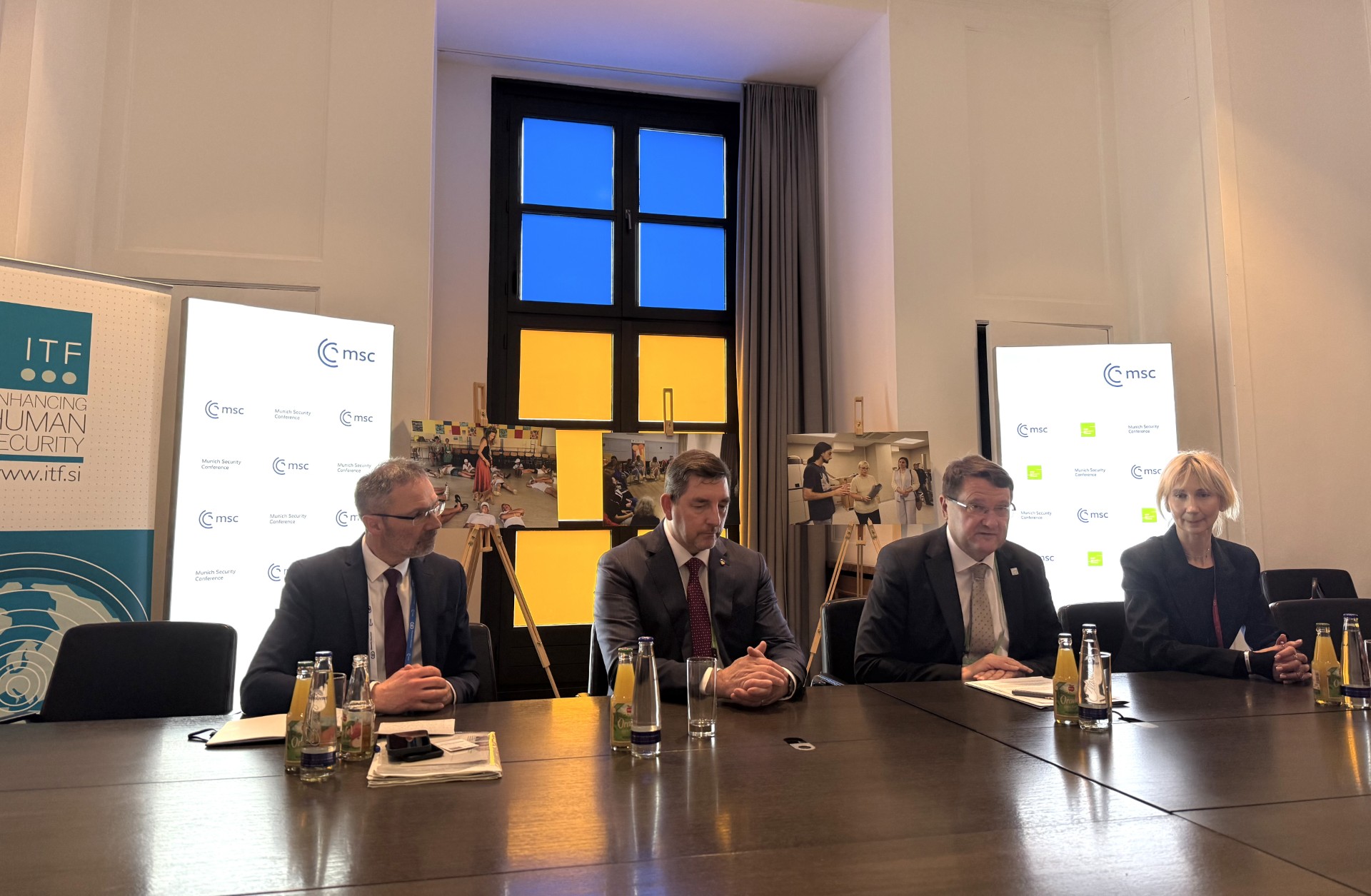
In his opening address, Amb. Lovrenčič framed the discussion within what he described as a “new horror of war” unfolding in Ukraine, marked by prolonged civilian suffering, exhaustion, and the normalization of trauma. He underscored that while humanitarian issues are increasingly present at global security forums, they often remain marginal to core political debates. He stressed that neutrality in the face of sustained civilian harm is no longer a moral option and emphasized that security discussions must take explicit account of human suffering, particularly the psychological and social consequences of prolonged conflict. Drawing on ITF’s experience, he highlighted the growing scale of invisible wounds — anxiety, chronic stress, and trauma — and warned that humanitarian responses continue to lag behind the rapidly expanding mental health needs of the population.
Ms. Olga Rudnieva described how rehabilitation at the Superhumans Center is understood as a holistic process that goes beyond medical treatment. She emphasized that prosthetic care alone is insufficient if people remain isolated or unable to re-engage with life. Supporting survivors to rediscover motivation, set goals, and imagine a future is a central part of recovery. As she noted, “A prosthesis has little meaning if a person never leaves their apartment. Recovery begins when people find a reason to live again and are supported to take steps toward a future they choose.”
She further stressed the importance of preparing for the period after the war while the conflict continues. Once active hostilities end, exhaustion often replaces hope, leaving limited capacity to rebuild. For this reason, the Superhumans Center is already expanding rehabilitation services across Ukraine, investing in people, professional training, and knowledge that will be essential for long-term recovery and social reintegration.
Dr. Aleš Musar highlighted the role of international engagement and solidarity, particularly in addressing mental health needs. Drawing on his work with first spouses, including Ms. Olena Zelenska, he emphasized that mental health has become a shared priority at the highest levels. He underlined that one of the most immediate and meaningful actions international partners can take is to visit Ukraine, listen to those affected by the war, and demonstrate through presence that they have not been abandoned. In this context, Dr. Musar and ITF Director Amb. Lovrenčič visited the Superhumans Center in Lviv in November 2025, where they met with patients and staff and discussed long-term support needs.
Dr. Martin Schuldes underlined that partnerships with Ukrainian medical centres such as the Superhumans Center are mutually beneficial. He noted that Ukrainian professionals, confronted with unprecedented numbers of complex injuries, have rapidly developed leading expertise in areas such as amputations, facial reconstruction, and trauma rehabilitation. Through cooperation with Ukrainian institutions and specialists, European and international partners also gain valuable knowledge and experience that can strengthen medical systems and preparedness beyond Ukraine.
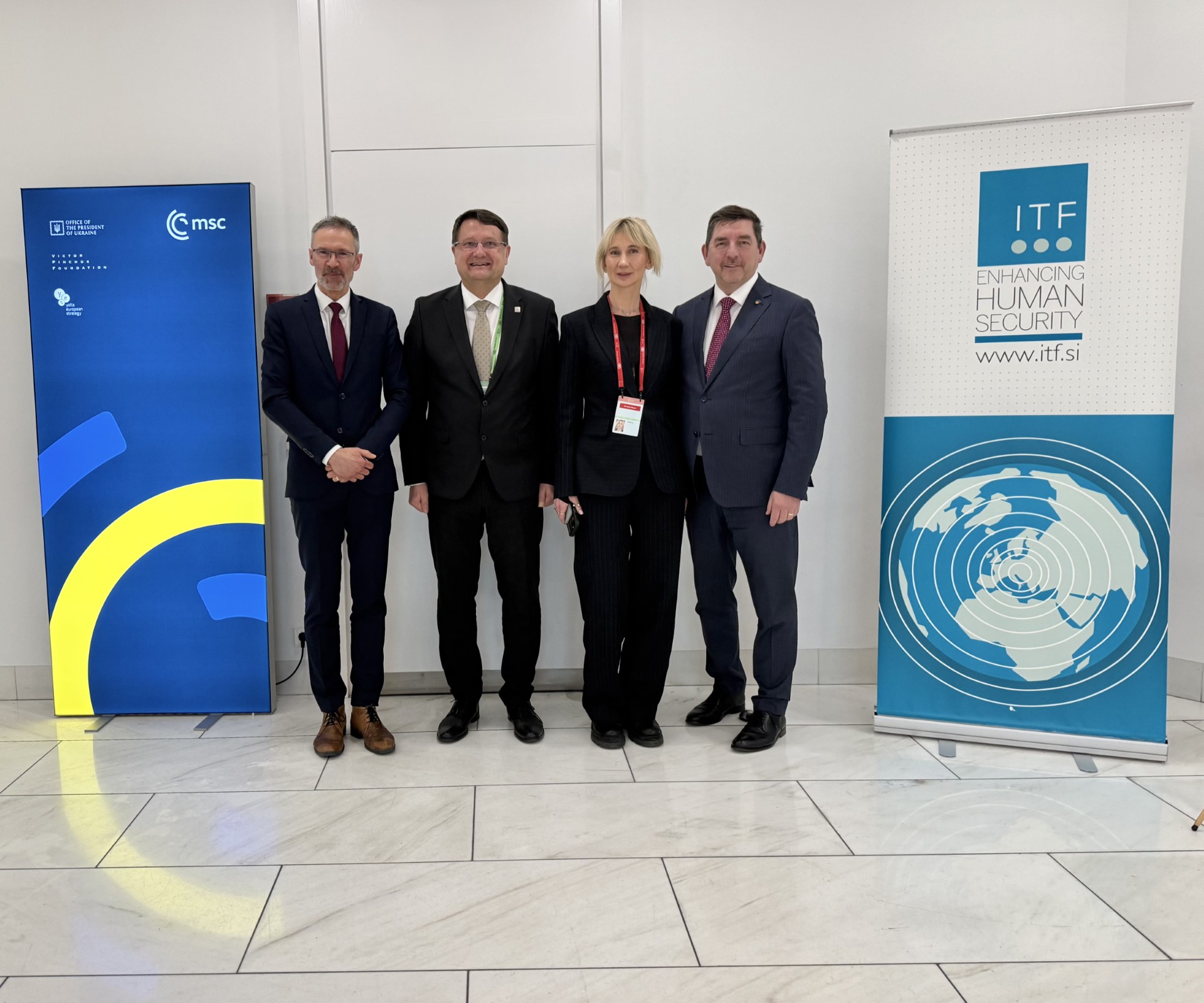
By hosting this discussion at one of the world’s most influential security gatherings, ITF and its partners helped ensure that the voices and experiences of war-affected people remained visible at the highest levels of global dialogue. While the Munich Security Conference often focuses on strategy and state security, this event placed the spotlight where it belongs – on individuals, families, and communities striving to heal. Elevating their needs in global conversations is essential to building a more humane, resilient, and lasting peace.
ITF expresses its sincere appreciation to the organizers of the Munich Security Conference and Ukraine House for providing space for humanitarian perspectives within this important global forum, and thanks all panelists for their thoughtful contributions to a discussion that placed people, dignity, and human security at the center of the security dialogue.
The event was supported by the Consulate General of the Republic of Slovenia in Munich and the Embassy of the Republic of Slovenia in Berlin.