From Minefields to Farmland in Kurdistan Region of Iraq
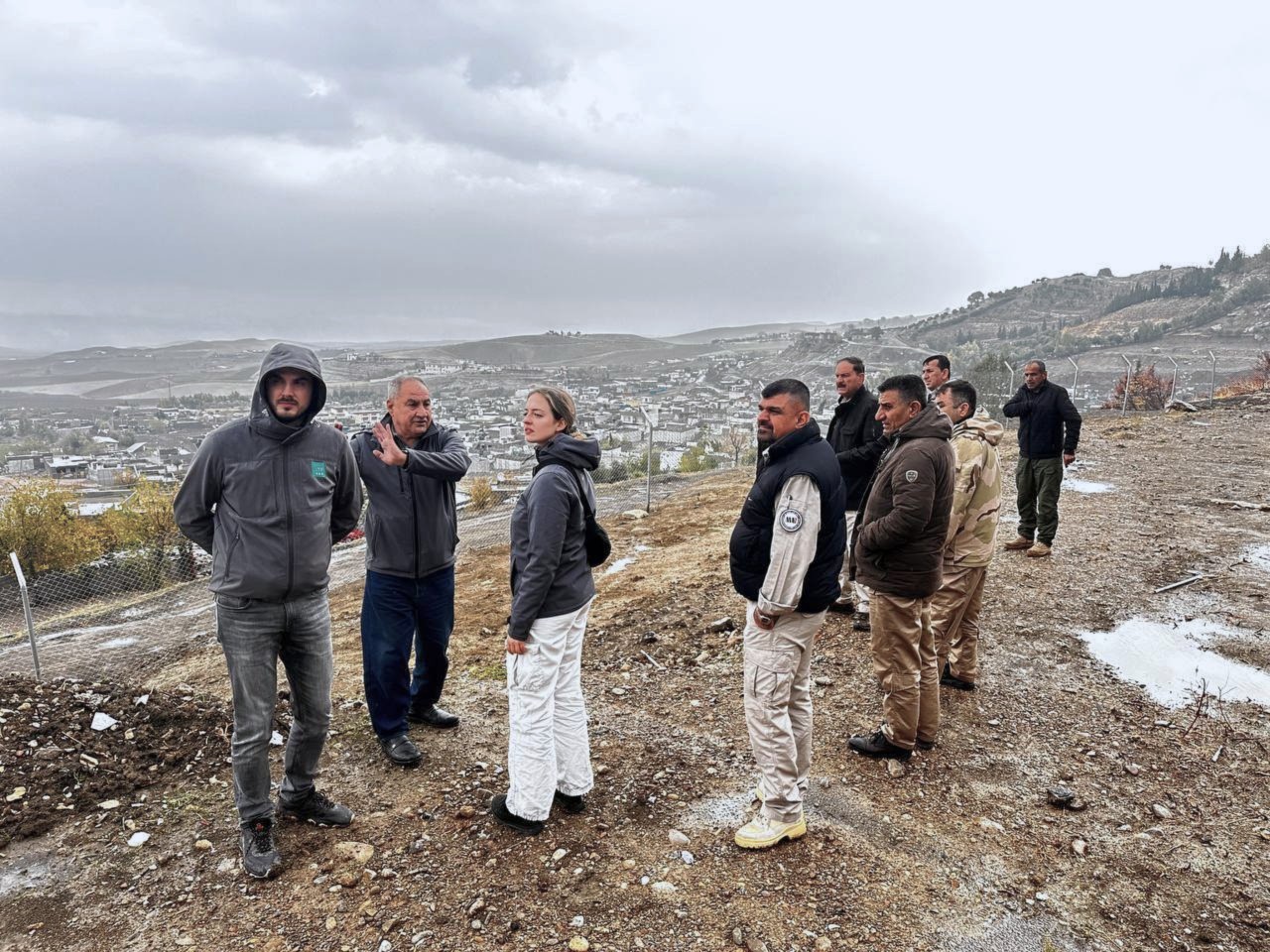
From 7–12 December 2025, our team travelled to the Kurdistan Region of Iraq for a monitoring visit, combined with a donor visit, to follow humanitarian mine action activities implemented in partnership with the Iraqi Kurdistan Mine Action Agency (IKMAA) and supported by the Slovenian Ministry of Foreign and European Affairs (Slovenia Aid & Partnerships). Being on the ground allowed us not only to monitor progress, but also to speak directly with deminers, authorities, and landowners, and to better understand what mine clearance means for everyday life.
Initially, we traveled to Sulaymaniyah, where we were warmly received by the General Director of the Sulaymaniyah Mine Action Center, Mr. Muhsen Najeeb, together with representatives of the General Directorate of Mine Action. Together, we visited former minefields that have been cleared with Slovenian support provided through ITF. Standing on land that is now safe to walk on, IKMAA deminers explained the technical complexity of their work. Due to years of erosion, heavy rainfall, vegetation growth, and environmental changes, explosive remnants are often buried far deeper than expected.
“In some areas, we had to remove up to ten metres of soil,” one deminer explained. “Only when the detectors no longer react can we say the land is truly safe.”
About an hour’s drive away, we visited another former minefield that has since been returned to its owner, a local farmer. He described how, after purchasing new farming machinery, he noticed shells and parts of explosive ordnance emerging from the ground.
“I wanted to start cultivating the land, but when I saw the ordnance, I contacted IKMAA,” he told us.
What was initially planned as a four-month clearance task took nine months due to the difficult terrain and the depth at which explosive items were buried. Today, the land is once again productive. Beans are growing where explosive remnants once lay hidden, and in spring the farmer expects to sell his harvest and support his family.
As we walked the site, IKMAA deminers guided us through the full clearance process. They spoke openly about the challenges of their work, but also about what motivates them.
“The work is hard and dangerous,” one deminer reflected, “but we also get to see the most beautiful places and nature of our country.”
On this same site, the team uncovered a clay pot full of platinum coins, estimated to be more than 2,000 years old, now displayed in the Sulaymaniyah museum, illustrating how clearance can also help preserve cultural heritage.
Back in Erbil we were then joined by the Ambassador of the Republic of Slovenia to Türkiye and non-resident Ambassador to Iraq, H.E. Mr. Gorazd Renčelj, together with his team. We were welcomed by the Head of IKMAA, Mr. Jabbar Mustafa Rasool, who underlined the importance of Slovenian support provided through ITF for sustaining humanitarian mine action activities in the region.
During the meeting, he expressed appreciation for Slovenia’s continued engagement and support, which enables demining teams to operate in challenging conditions and directly contributes to improving safety for local communities.
He explained that the Kurdistan Region of Iraq remains heavily affected by legacy contamination, with landmines and explosive remnants of war originating from conflicts in the 1960s, 1980s, and early 2000s.
“Apart from ITF, only one other international humanitarian organisation supports our mine action work,” Mr. Mustafa noted.
As a State Party to the Anti-Personnel Mine Ban Convention, Iraq is working to fulfil its obligations under Article 5, with a clearance deadline set for 2028. Continued international assistance remains essential to address legacy contamination and support these efforts.
We were then also received by the Head of the Department of Foreign Relations of the Kurdistan Regional Government, H.E. Mr. Safeen Dizayee, reaffirming the importance of long-term cooperation.
Towards the end of the visit, we travelled approximately two and a half hours northeast of Erbil to Duhok Governorate for a Minefield Handover Ceremony marking the completion of clearance at a site implemented through ITF–IKMAA cooperation, with the support of the Slovenian Ministry of Foreign and European Affairs in 2024 and 2025. We were welcomed by Ms. Shilan Thamer, General Manager of the Duhok Mine Action Center, together with IKMAA’s Head, Mr. Jabbar Mustafa Rasool and Deputy of the Governor of Duhok, Mr. Majde Salih. During the ceremony, Ambassador Renčelj highlighted Slovenia’s continued commitment to humanitarian mine action and civilian safety.
ITF has been cooperating with IKMAA since 2022, and over this period the partnership has delivered concrete results. With ITF support and funding from Slovenia, approximately 2 million square metres of land have been cleared across 81 minefields, and more than 6,000 landmines and other explosive items have been safely removed.
Much of the support goes toward essential operational needs, such as fuel and drivers, enabling demining teams to reach remote minefields in mountainous areas where access is difficult and terrain is steep. What stands out most, however, are the people. IKMAA deminers bring years of experience, follow strict safety standards, and speak with genuine pride about their work.
“Clearing minefields means saving lives,” they told us. “The lives of our people — our brothers and sisters.”
Despite the progress achieved, challenges remain. Across the Kurdistan Region of Iraq, more than 260 square kilometers of land are still contaminated and unsafe. These areas continue to hinder agriculture, development, and recovery, despite the region’s fertile soil and remarkable natural beauty, where tourism could one day thrive.
What we saw during this visit was real progress — but also a clear reminder that continued international support is needed to ensure land can be safely returned to communities and used without fear.